


- Home
- Companies
- SR2O Holdings, LLC
- Products
- VersaBlack - Model Active+ - ...
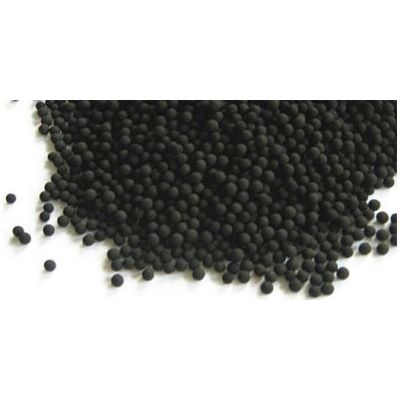
VersaBlack - Model Active+ -Impregnated Pelletized Activated Carbon
VersaBlack Active+– Enhanced Pelletized Activated Carbon thru Impregnation. An area within the carbon finishing building of the Facility has been designated for the enhancement of granulated or pelletized activated carbon. In order to create high value, activated carbon, the carbon can be impregnated with various materials to enhance the selective adsorption of different contaminants in either gas or liquid streams. For example, the porous activated carbon material can be impregnated with many compounds which contain chemically charged ions such as iodine, silver, potassium, or various metallic ions such as Al, Ni, Mn, Zn, Fe, Li, Ca. These can be impregnated singularly or in combinations to improve the overall performance in removing specific contaminants.
For example, due to its antimicrobial and antiseptic properties, carbon impregnated with silver is used as an adsorbent for purification of domestic water. Also, the granular or pelletized activated carbon can be used as a support matrix and impregnated with various materials that can be used as catalysts for other chemical reactions. The catalyst material can be reclaimed by burning off the carbon and reclaiming the catalyst for reuse. Selected examples of impregnated pelletized carbon that can be produced at the facility, and their commercial applications are listed below. In each example, the pelletized carbon can be impregnated with the Chemical Agent listed, and the resulting product will be used in the application described.
The chart describes various customized carbon products that can be produced at the Facility to fill the needs of specific customers. The incremental costs for producing the products listed above, plus other impregnated carbons, is nominal. However, the average selling price on a per pound basis of impregnated activated carbon can be four to six times higher than plain activated carbon. The additional costs of producing impregnated carbon, and the enhanced revenue expected from impregnated carbons, has not been included in the financial projections and estimates included in this Memorandum. As much as five to seven percent (5 to 7%) of carbon production is projected to be converted to impregnated carbon and placed in the marketplace during the first few years of operation.