

- Home
- Companies
- Gemco Energy by ABC Machinery
- Products
- Waste Tyre Pyrolysis Plant
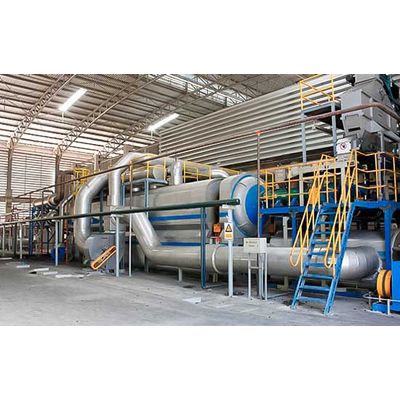
Waste Tyre Pyrolysis Plant
GEMCO provides a complete turnkey solution for tyre pyrolysis projects, achieving resource utilization, harmless treatment, and reduced disposal of waste tyres in a safe, environmentally friendly, and continuous way. Tyre pyrolysis involves subjecting waste tyres to a process where their organic components are cracked in anaerobic or oxygen-deficient conditions at an appropriate temperature. This process releases volatile substances and forms solid carbon as the main product. The resulting products include fuel oil, carbon black, and combustible gas. These products have similar performance to industrial products and are high-grade energy sources that are easy to transport and generate less pollution during reuse, thus having high added value.
GEMCO’s pyrolysis technology can efficiently break down the high-molecular-weight polymers in waste tyres, reducing them to small molecules or monomers. This process results in approximately 45% fuel oil, 35% carbon black, 10% steel wire, and 10% combustible gas as output. The main components of the pyrolysis gas are short-chain organic compounds, primarily including H2 and hydrocarbons ranging from C1 to C4, with a calorific value of up to 33 MJ.
GEMCO waste tyre pyrolysis solution includes a waste heat recovery system, which uses the high-temperature flue gas generated during the pyrolysis process to produce electricity. The combustible gases generated by pyrolysis can be directly used as fuel to provide energy for the pyrolysis reactor. Such design enhances the overall energy efficiency of the system, reduces production costs, and supports businesses in energy conservation and emission reduction efforts.