


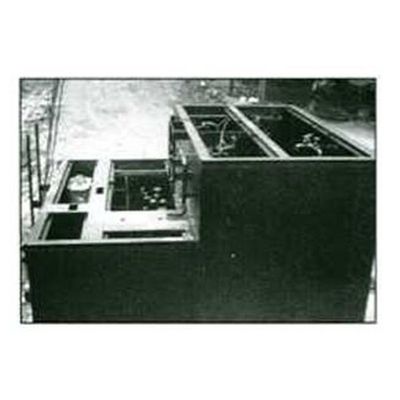
Legacy - Model LF-001 -Waste Water Treatment Tertiary Filtration Systems
Improving the quality effluent discharged from secondary wastewater treatment systems with advanced wastewater treatment process is a major need. Various types of tertiary treatment methods such as intermediate surface sand filters, micro-strainers, polishing lagoons, and rapid sand filter systems are available. The most common method used in small package style wastewater treatment systems for tertiary treatment systems is the rapid sand filtration process.
Process ~ the purpose of tertiary treatment is to remove BOD5 and suspended solids (TSS) beyond levels achievable by secondary treatment systems. In the rapid sand filtration process, the BOD5 and suspended solids (TSS) are strained by a mixed media filter allowing clean effluent to pass through while BOD5 and suspended solids (TSS) are held in the filter media. The media is backwashed and the remaining solids and BOD are returned back to the secondary system.
Legacy Environmental Process, LLC specializes in the manufacturing of rapid sand tertiary filter systems with flows from 15,000 gallons per day up to 300,000 gallons per day.
The tertiary filter system is a prefabricated steel factory built unit complete and ready for easy installation at the project site. The main components of the filter system are: Duplex filter cells, clear well chamber, duplex backwash pumps, mudwell chamber, duplex mudwell return pumps, air scour blower unit, disinfection equipment either tablet chlorination, gas or liquid feed chemical units, or ultra-violet disinfection unit, and automatic electrical controls.
Operation ~ the tertiary filter unit is designed for automatic operation. When the solids in either of the filter cells reach a designated level, the automatic control system will air scour the filter cells causing the concentration of solids to rise to the top level of filter media and keep them in suspension. The filter process will continue if this concentration is insufficient to cause a backwash cycle once solids reach a concentration level too great for filtration, the automatic control system will activate the backwash pumps and water wash the filter media. The dirty water is pumped into the mudwell chamber and recycled back to the secondary treatment system or head of the plant. Once the wash cycle is complete, the filter cell is returned on line.