


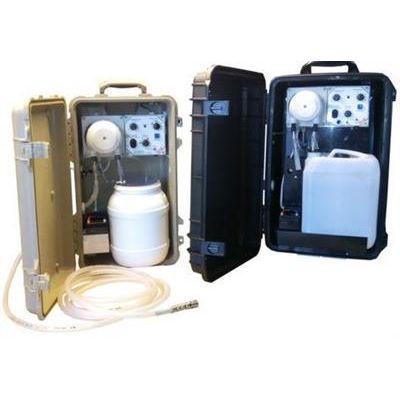
SchulzEP - Model Tsoi -Water Sampler
The sampler is designed for the sampling of water (waste water, potable water, industrial, chemical, etc.). This device allows you to check the quality of water flowing in a certain period of time depending on the setting. Sampler taken from the flow of small quantities of water, which stores the one or more bottles. After filling, the bottles are obtained samples taken to the lab for analysis.
Types of sampling
Samplers can take samples in these types of sampling: A: Time - samples are taken at fixed time intervals. For example, every 6 minutes, the sampled volume of 100 ml. B: volume
- samples are taken at a variable interval that varies in dependence on the flow-volume (quantity) with a constant volume of samples to be collected. For example, sampled sampler 500 ml flowed through after every 10 m3 of water in the channel. For this type of sampling is necessary to connect the meter to the sampler using the pulse signal.
C: flow - samples are taken at a fixed interval, a variable size sample drawn. The sample size is variable in dependence on the instantaneous flow rate (l / s). For example, sampler sampled every two hours, the sample size is dependent on the instantaneous flow rate. For this type of sampling is necessary to connect the meter to the sampler using the analogue signal flow.
The principle of sampling.
The sampling is nowadays the most used two principles: vacuum and peristaltic.
First Vacuum operation - in which the compressor does not come into contact with the sampled water.
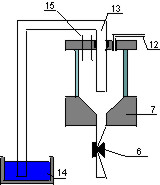
Step 1: closure of the drain valve chamber 6th
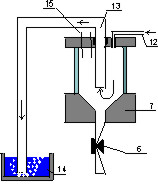
Step 2: pressurizing the sample chamber 7, occurs 12th inlet blowing suction hose 13th Step 3 in the sampling chamber, a vacuum is created, so that via the suction hose 13 draws the sample. Vacuum is created until the water level in the chamber ascends after a sensor for detecting the level 15, or if the elapsed time setting for suction. In the case that at that time not to soak the sample in the sampler stops sampling chamber to create negative pressure in the chamber and releases compressed air again to try to eliminate clogging of the suction hose. After this purging again sucked sample tested .. Step 4:
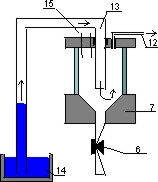
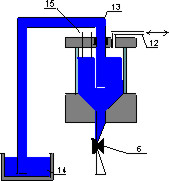
at the moment when the sensor for detecting water in the chamber 15 will produce water level is reached, the vacuum is supplied pressurized air that occurs excess water from the extrusion chamber and back into the flow tube.
Step 5: when the level in the sample chamber, the lower edge of the suction hose 13, the pressure of air blown through the suction tube and below the lower edge of the suction hose remains collected water sample. Step 6: sampler opens the drain valve 6, it will release the sample into the bottle.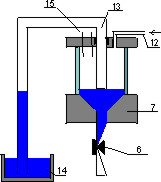
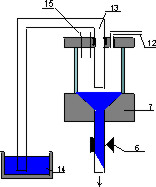
Peristaltic second principle - which works on the principle of a pump with hose squeezing

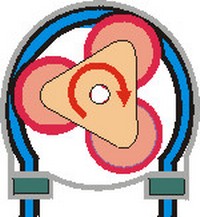

The figure shows a diagram of a circular pump with three wheels. The peristaltic pump operates on the principle of memory material from which is made the pump hose. This hose is progressively squeezed-engaging wheel in the direction of pumping medium. Pump hose after release of pressure wheels trying to return to its original round cross-section, thereby creating a vacuum to suck the water. Next wheel closes sucked quantity and the outlet of the pump pushes the water. This type of pump is used for example in health care, in dialysis, as well as metering pumps etc .. suction or blowing is controlled by the direction in which the pump rotates. Size of the sample is determined by the pump speed of sucked water that is detected by the sensor in the intake pipe. This principle is particularly preferable to vacuum during sampling type C
Portable samplers:
Portable samplers are small, lightweight, battery-powered and thus allow easy transport. The most common deployment of portable sampler in places where there is no electric power distribution, such as the sewerage network, to discharge into the river to check the wastewater discharged from factories and the like.
Stationary sampler:
Stationary samplers are metal casing with a thermal insulation for tempering the samples at 4 ° C, are supplied from the power distribution. They are mainly used to control the water in sewage treatment plants, to discharges of waste water from plants and the like.