


- Home
- Companies
- Azure Biosystems Inc.
- Products
- Azure - Western Blot Imaging Systems
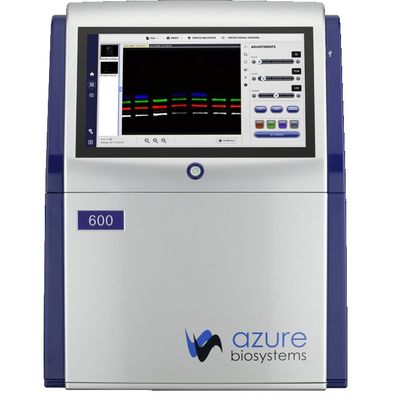
Azure - Western Blot Imaging Systems
The imagers that are revolutionizing Western blot imaging.
Lasers for Sensitive NIR imaging
Using lasers for NIR fluorescent imaging sets the Azure Imagers apart from competitors. Our Imagers are the only ones on the market to use lasers. Narrow, specific laser excitation leads to higher signal, with less background and increases the overall sensitivity of your Western blots.
Flexibility for Optimal Performance
Azure Imaging Systems provide the sensitivity, adaptability, and performance that are needed by a wide variety of experimental processes—allowing you to use the same imager to keep up with research changes and introduce new techniques as your scope continues to develop. Find out which Azure Imager is best for your research by reviewing the comparison table below.
Intelligent Workflow for Easy Customization
From upstream conjugation to downstream analysis, we help provide the most inclusive workflow for your research. The user interface of each Azure Imaging System allows for total customization over imaging protocols, while ensuring repeatability from sample to sample.
Best Practices for Publishable Results
Every piece of technology from Azure Biosystems is designed with your future publications in mind. Our reagents, imaging systems, and software work together seamlessly to help you accurately follow Western blot best practices and generate journal-ready images.
Every Azure Imaging System provides high-resolution imaging that is ideal for publication purposes, as well as higher pixel well cap for higher dynamic range. You can overlay a color marker with the chemiluminescent signal for ease of documentation and molecular size determination.
Unique near-infrared (NIR) lasers help keep signal high and background low. Our high-performance multiplex NIR lasers and filters deliver robust excitation energy, which maximizes emission strength for maximum sensitivity.
Several Azure Imaging Systems can be upgraded with the Azure Q Module, an optional green fluorescence channel intended for detecting Total Protein Stains such as TotalStainQ.
This can be used for efficient total protein normalization (TPN) of quantitative Western blots and helps achieve the most accurate quantification.
The Azure Imaging Systems’ laser technology offers two NIR detection channels along with three visible fluorescence (RGB) fluorescence channels. This allows you to study multiple proteins in a single assay, even if those targets overlap in molecular weight. You can also easily resolve and quantify co-migrating bands, such as phosphorylated versus pan-protein forms.
Ready to expand your research past gels and membranes? What truly sets Azure Imaging Systems apart is their ability to image more than just blots.
From tissue sections and media plates to in-vivo fluorescence of three-dimensional samples, these imagers’ unmatched depth-of-field enable unparalleled imaging flexibility.
The ability to do multiple applications with one imager
- Chemiluminescence
- Gel Documentation
- Model Organism Imaging
- Phosphor Imaging
- Post-Translational Modifications
- Total Protein Normalization
- Western Blotting
- Bacterial Plate Imaging