WTR-Engineering - Cup & Drum Circular Water Screens for Power Plants
WTR’s Cup and Drum Screens are one of the most cost effective means for fine screening of raw water. Cup and Drum Screens are used in all types of applications where continuous screening is required and protection of downstream equipment is essential. Applications include power plant raw water intakes (fossil & nuclear), industrial raw water, potable drinking water, irrigation and numerous other types of plants.
Debris in the flow can overwhelm and damage rotating screens, cause serious condenser issues or interrupt a water treatment process. Review of the source water is critical to the proper selection of the flow pattern, mesh aperture, rotating speeds and materials of construction. WTR’s extensive knowledge base can greatly aid in determining the most suitable of these, along with offering alternatives and options, beneficial to the design.
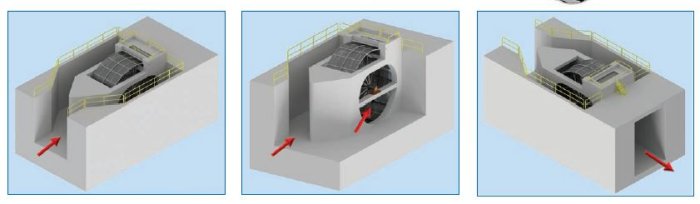
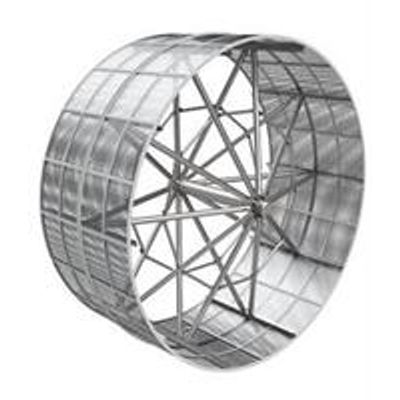
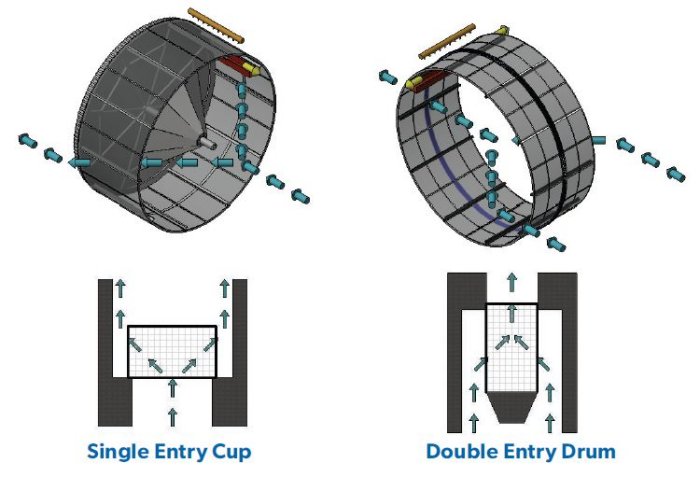
WTR’s Cup and Drum Screens are designed to automatically and reliably filter influent water and discharge recovered debris or marine life into the appropriate handling trough. Screens can be designed to handle typical water borne debris as well as unusual grasses, sea weed, jelly fish, and many different types of debris. WTR’s Cup and Drum Screens are available in various flow patterns including Single Entry Cup (SEC) or Double Entry Drum (DED).
To eliminate debris carry-over, the ‘Center Flow’ pattern is recommended for total separation of influent from effluent. The SEC and DED are both ‘Center Flow’ screens where the influent enters the center of the screen. Filtration is carried out by the rotation of the cup or drum and debris carry-over is completely eliminated.
Both flow patterns are available as Fish Recovery and Return to meet environmental requirements. Specialized water tight, hydraulically stabilized fish recovery buckets allow for the quick recovery of juvenile marine life. Organisms are elevated to deck level where gentle sluice sprays aid in discharging them into a return trough for reinsertion to their indigenous environment. After the fish sprays, the screen continues rotating past higher pressure debris sprays, washing the captured screenings into a separate debris trough for discharge or further disposal.
Common For Cup & Drum Screen
- Screens are built to specific conditions for flow, mesh aperture, panel style and debris or marine handling.
- Frame materials of mainly Carbon Steel (epoxy coated) or Stainless Steel (304L, 316L, Duplex or other).
- Main structure end seals of Neoprene & UHMW prevent bypassing of debris larger than the mesh aperture.
- Variable Frequency Drive (VFD) motors incorporate multiple speeds to provide flexibility during varying flow conditions.
- Shaft mounted drives reduce maintenance and eliminate drive sprockets, chains and cumbersome chain guards.
- Dual spray headers provide positive overlapping coverage and reduces pressure and volume for cleaning.
- Main shafts utilize anti-friction bearings for reliable, continuous operation and reduction in maintenance requirements.
Single Entry Cup Screens
- Simplified civil works or structural frame support for ‘drop in’ guided arrangement.
- Solid internal downstream back provides high strength frame with no bypassing.
- Extremely reliable operating performance due to simplified circular structure.
- Low maintenance with no permanent rotating components below water level.
- Extended debris elevators handle oversized or unusual shaped debris.
- Positive rotation via (cast iron or nylon) gear rack and drive pinion.
- Access platform with ladder and railing for wash water jet inspection.
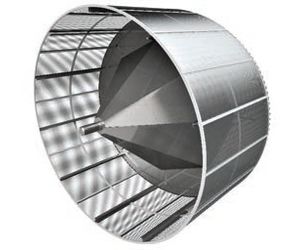
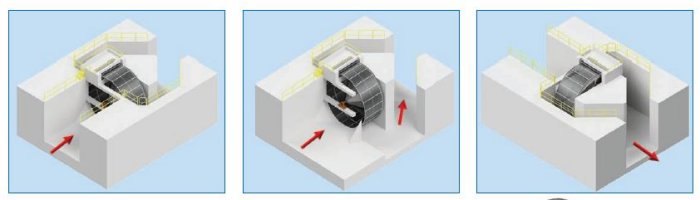
Double Entry Drum Screens
- Extremely reliable operating performance due to simplified circular structure.
- High strength frame design allows for operation under extreme flow conditions.
- Large submerged surface area accommodates high variations in flow and levels.
- Low maintenance with no permanent rotating components below water level.
- Extended debris elevators handle oversized or unusual shaped debris.
- Positive rotation via (cast iron or nylon) gear rack and drive pinion.
- Access platform with ladder and railing for wash water jet inspection