


Zanni Group
- Home
- Companies
- Zanni Group
- Products
- Zanni - Gas Stations
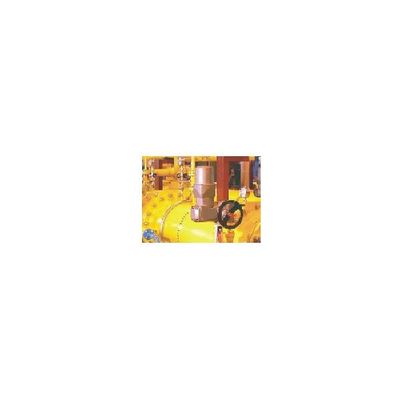
Zanni - Gas Stations
FromZanni Group
Our gas stations can be designed and manufactured as HP and LP Gas Pressure Reducing & Metering Stations. The natural gas is transported normally by means of pipelines under the pressure of 70 to 80 bar. The end-user of the gas needs it generally at a lower pressure.
Most popular related searches
shut-off valve
pressure reducing valve
pressure relief valve
pressure reducer
relief valve
drum filter
flow monitoring
water supply
water industry
pressure relief product
- To reduce the pressure an HP Reducing Station is required to reduce the gas pressure, for example, down to about 20 bar for the gas turbine applications.
- For most of the other applications, an HP Reducing Station is required as a first stage pressure reducing station followed by an LP station to reduce the gas pressure according to the requirements of the end-user, mostly down to less than 4 bar.
- A typical gas reducing station is consisting of emergency shut-off device (ESD), condensate knock-out drum, filter station, flow measuring, heater, line safety shut-off valve(s), pressure reducing valve, silencer, pressure relief valve(s), outlet section, instrumentation and control system.
- As auxiliaries it has condensate collecting facility, N2-purging facility, flare and venting facilities.
- According to application, some of above facilities may not be needed.
- Filtering to clean the gas from impurities and liquid droplets is important generally but it is very important for industrial plants since they are using a huge amount of gas.
- Therefore, our gas systems include every time a reliable filtering system that guarantees a cleaning of impurities up to 99,5%.
- We have designed and installed several High Pressure and Low Pressure Reducing Stations according to International and German standards around the world.
- emergency shut-off device (ESD)
- condensate knock-out drum
- filter station
- flow measuring
- heater
- line safety shut-off valve(s)
- pressure reducing valve
- silencer
- pressure relief valve(s)
- outlet section
- instrumentation
- control system
- condensate collecting facility
- N2-purging facility
- flare
- venting facilities
- and others
* Gas systems are designed, manufactured and put into operation under control of engineers certified and authorized by DVGW by following the rules of the association strictly.
** The DVGW (German Technical and Scientific Association for Gas and Water) stands for the industry self-regulation in the gas and water supply industry.
Its technical rules are the basis for safety and reliability for German and European gas and water supply.