


Wyler Ag
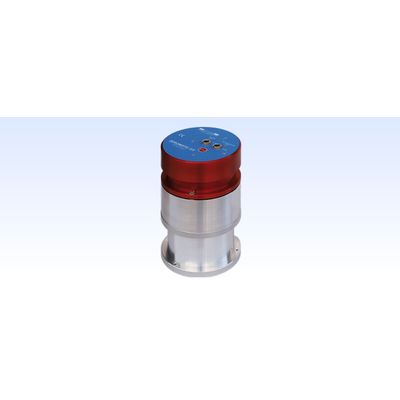
Zeromatic Dual-Axis Inclination Sensor
FromWyler Ag
The ZEROMATIC is a high-precision dual-axis inclination sensor for long-term monitoring with a measuring range of ±1°. The ZEROMATIC dual-axis inclination sensor is perfectly suited to monitoring even the smallest of changes in inclination over longer periods. The excellent accuracy is achieved through regular and automatic reversal measurements, allowing the determination and elimination of any drift of the absolute zero.
Most popular related searches
machine monitoring
automatic monitoring
bridge monitoring
machine tool monitoring
inclination monitoring
transmission data
building monitoring
- Measuring range: ±1°
- Long-term accuracy: 1 Arcsec
- High-precision mechanics for the automatic reversal measurement
- Rugged precision aluminum housing to minimize external influences
- Data transmission to PC/laptop or to a display unit
- LED, showing the status of the instrument
There are two versions of the ZEROMATIC sensor available: ZEROMATIC 2/1 and ZEROMATIC 2/2.
- The ZEROMATIC 2/1 has one inclination sensor which continually measures either in the X or in the Y direction. When carrying out a reversal measurement, the sensor stops at four positions: +X, +Y, -X and -Y. Afterwards the new exact, absolute inclinations in both X and Y directions are made available. The ZEROMATIC 2/1 is typically used to monitor inclination changes of structures such as dams and bridges, which exhibit only slow changes. The interval between 2 reversal measurements is usually in the range of 15 minutes to 6 hours.
- The ZEROMATIC 2/2 has two inclination sensors, allowing continuous measurements of inclination changes in both the X and Y directions. At defined intervals it will perform a reversal measurement and compensate for any offset. The ZEROMATIC 2/2 is typically used to monitor machine tools or other objects which show considerable changes e.g. due to temperature changes. The interval between two reversal measurements is usually in the range of 3 to 24 hours.
- Monitoring of critical machines
- Monitoring of buildings, bridges or dams
- Defining absolute zero references e.g. for radars