
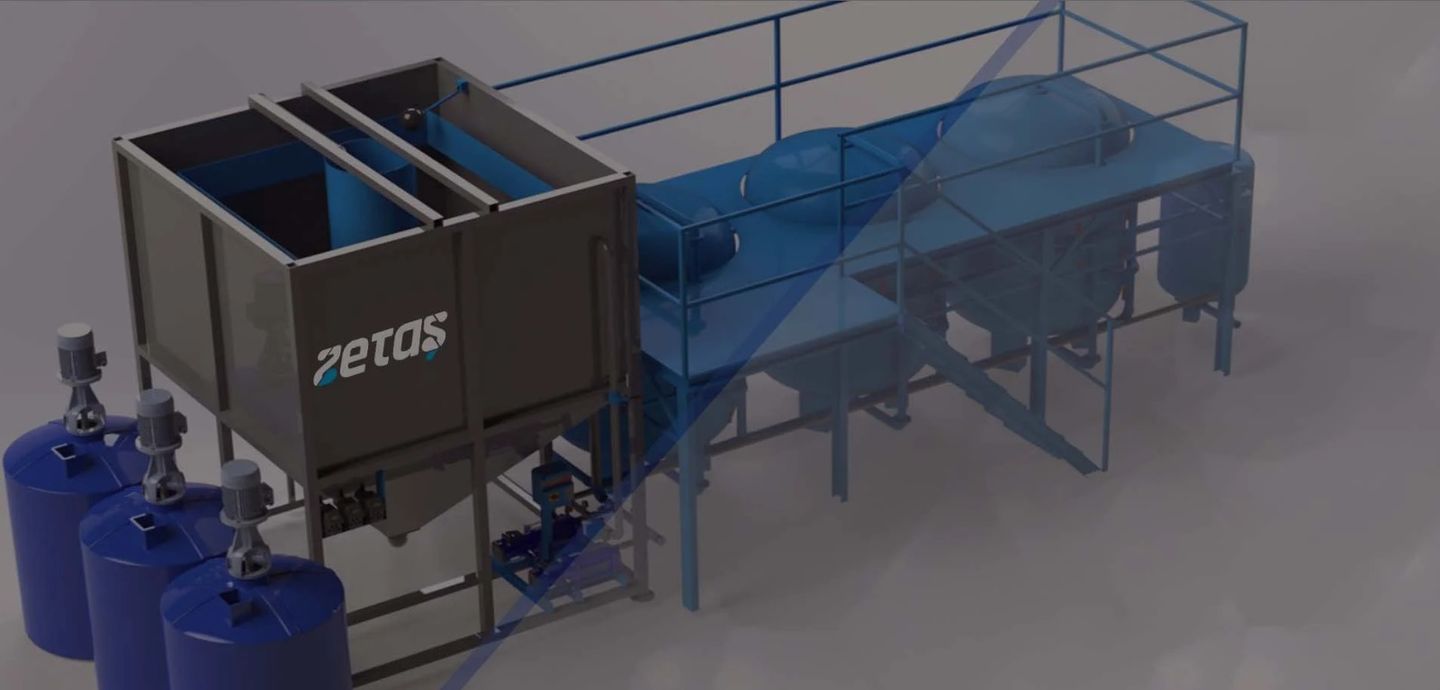

Zetas - Electro Deionization System (EDI)
In recent years, most of the research on obtaining high purity water has focused on technologies in which no chemicals are used in water purification processes. This need for pure water is nothing new, and studies to obtain pure water have been going on for centuries. Electro deionization System (EDI), one of the most effective applications for obtaining pure water, was first designed by German scientist Kollsman as early as 1957. The years when this application, designed by Kollsman, started to become a solution partner in the sectoral sense, corresponds to the second half of the 1980s.
Today, there are many points that distinguish the system, which is one of the water separation methods used to obtain high purity water, and which is one of the most preferred methods at this point, from previous applications. Electro deionization, called EDI for short To define it with its structural and functional features, it can be stated as an application in which electricity is used in the production of pure water and no chemicals are included in this production process. As the name of the system suggests, this water treatment method gains functionality by combining two different techniques, electrodialysis and ion exchange. In order for the system to produce pure water, the resins in which ion exchange is provided act as connectors that allow the passage of electric current. Thanks to this electric current, the ions in the source, which is included in the system from the feeding water, are continuously directed towards the condensation line. The most important feature that distinguishes this water treatment application from classical water treatment systems and methods is that electric current is included in this process.
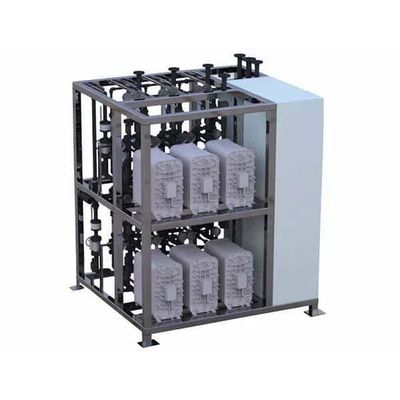
The quality of water is as important as the amount of water needed for production in industrial sectors. For this reason, the source from which the water used in production is obtained does not always meet the demanded water quality. For this reason, quality and pure water supply is inevitable in order to follow a sustainable production policy. On the other hand, considering that approximately 20% of all water reserves in the world are used in industrial production, it is very important to include this water in the production processes in a fast and low-cost way, as well as to obtain pure water. Today, the name of the application that fully meets this need of industrial production companies is Electro Deionization (EDI) System.is The main task of the system is to obtain pure water by removing unwanted components such as carbon dioxide, silica, boron and ammonia and ionizable elements in water resources. The EDI module, where the water purification process is carried out, consists of chamber arrays separated from each other by ionized exchange resins and membranes. Thanks to the electric current applied in parallel with the flow of water in the module, the ions move towards the module and membranes. The ions treated here are released back to the environment and are included in the production process from the drainage point.
Although the Electro Deionization (EDI) System is a newly heard application in the processes of obtaining ultrapure water, it has been actively used in the industrial production processes of our country for approximately 25 years. So what are the advantages of this system?
- Once it is ready for use, pure water is produced with the same efficiency and quality, regardless of external factors.
- Although the Electro Deionization (EDI) System is a highly engineered product, there is no need for an operator in its use.
- This system, which has very low periodic maintenance costs, is a product that its users can gain economic added value in the medium and long term.
- At the same time, this system, which has a modular structure and an easy installation scheme, occupies very little space in the facility as it requires minimum application area.
- EDI is a product that can be adapted in line with the production needs of the facility. So much so that when the need for pure water increases, this demand can be met instantly with new units to be included in the system.
- The most visible benefit of the system is that there is no need for the regeneration process, which is a water softening application. Thus, the system has a faster functional structure and prevents potential hazards that may arise during the release of regenerative chemicals such as acid and caustic. Thus, it also plays an important role in the implementation of occupational safety protocols in the facilities.
- Electro deionization (EDI) System, which is an environmentally friendly application, is also a strategic solution partner in the implementation of sustainable environmental policies, since no chemicals are needed in any working process of the system .
On the other hand, the need for pure water is a vital phenomenon for many industrial sectors as well as the continuation of human life.
- Pharmaceutical industry,
- automotive industry
- microelectronic industry,
It is one of the sectors that need ultrapure water. This system, which is mostly used in the energy sector in our country, can be used in all sectors that need pure water during the production stages.
How Does the Electrodeionization (EDI) System Work?
As a matter of fact, the working principle of the Electro Deionization (EDI) System, which has many advantages, is quite simple. The current power required by the system, which operates under an uninterrupted, strong and direct electric current, is between 300 and 400 V. The method applied by the system to obtain pure water is to enable the positively and negatively charged ions in the direct current to move towards the opposite electrodes. In the first stage, cationic loads such as calcium, magnesium and nitrogen in the raw water passing through the mixbeds, which are called ion exchangers, are exchanged with H+ ions, and anionic loads such as chlorine, sulfate, bio carbonate and silicon are exchanged with OH- ions. With this ion exchange, the H+ and OH- ions released into the water form a water molecule by structural union among themselves.
The system has many features compared to classical water purification methods and therefore it is preferred more frequently. First of all, this system, in which no chemicals are used in the process of obtaining pure water, stands out because it is environmentally friendly and reduces the number of products needed. On the other hand, one of the most obvious advantages of this system over conventional pure water production methods is that there is no waste water during and after production.