

- Home
- Companies
- SUEZ Water Technologies and Solutions
- Services
- Cleargreen - Biological Treatment of ...
Cleargreen - Biological Treatment of Effluents With High Concentrations of Ammonia
Cleargreen™ (for Cyclic Low Energy Ammonium Removal) augments anaerobic treatment of biosolids (biological, primary, co-digestion) by removing the nitrogen overload.Deammonification allows the treatment of concentrated ammonia generated by anaerobic digestion of sludge in the side stream of the plant– limiting the impact of digestion on the main water treatment line.
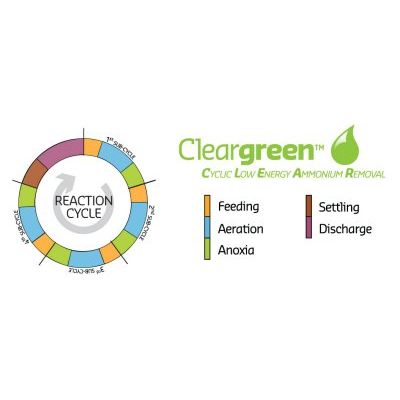
Cleargreen™ is designed to work within a biological sequencing batch reactor (SBR) such as Cyclor™, a Degrémont reactor that allows the successive completion of all treatment phases in the same tank.
Feed, aeration and deammonification phases are divided into sub-cycles and adapt in duration and intensity according to the characteristics of the effluent to be treated. The deammonification process uses Anammox bacteria, naturally present in the environ- ment. Cleargreen™ does not require the addition of an external seed biomass to function.
A specific treatment after anaerobic sludge digestion: with Cleargreen™, the loads of ammonia and nitrates do not return to the head of the water treatment line, but are treated in an effective manner.
The reactor is equipped with sophisticated controls, continually monitoring the system to limit human intervention.
Removal of Nitrogen generated by anaerobic digestion of biosolids
- Performance and Savings:
- Cost-effective treatment of stream with high-loads of ammonia
- Sustainable Development:
- Reduction of resources (energy, chemicals) used
Flexibility of use:
- Process adapts depending on the quality of effluent to be treated
- Automation of process controls
- Robust adaptability to variations in flow, load and effluent composition
- Process that is very beneficial for plant rehabilitations
- New solution for treating return flows from digestion
- Spontaneous installation of the biomass
- Patented process
- Quick start-up
- No reactive agents such as external carbon needed
- Contributes to the preservation of energy resources
- Automatic regulation of air supply = control of consumption
60% less air needed compared to conventional activated sludge treatment