


GCAS Quality Certifications
- Home
- Companies
- GCAS Quality Certifications
- Services
- Building Life Cycle Assessment Services
Building Life Cycle Assessment Services
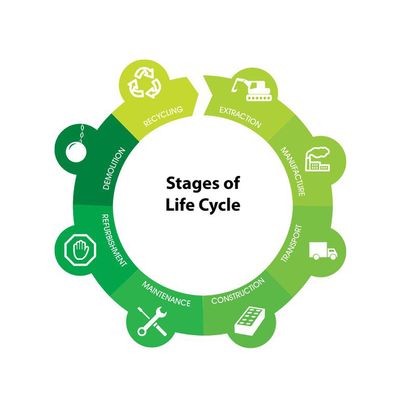
Building Life Cycle Assessment – Building and utilizing a structure for a long time has long-term effects on human health and the environment. The rapidly expanding science of life cycle assessment (LCA) illuminates these impacts in terms of their quality, severity, and length. Building generates environmental impacts throughout its life cycle. The various stages of a typical life cycle as defined in LCA are production & construction stages, use stage, end-of-life stage, and externalized impacts beyond the system boundary.
Most popular related searches
life cycle assessment
building life cycle
environmental impact
green building
building certification
carbon emissions
building environmental impact
LEED
life science
LEED building
In the building industry, LCA is commonly used to:
- Help building owners make informed choices regarding sustainability and/ or resilience.
- Evaluate design options by providing insight into materials choices and their environmental impacts.
- Achieve green building certification (e.g. in LEED v4 or Living Building Challenge).
- Assist in assessing the environmental benefits of new products and/or policy.
- State that a system or product is environmentally preferable to another (to make a comparative assertion).
- Compare to benchmarks to evaluate a building’s performance.
Importance of Building Life cycle Assessment
- A global viewpoint that Buildings are responsible for 39% of worldwide carbon emissions. Construction Industry must accept responsibility for their projects’ environmental impact.
- The building industry is faced with the challenge of providing better homes to people all over the world while minimizing the environmental impact of new construction.
- Life-cycle assessment is a scientific process that can aid green building professionals in their attempts to construct more sustainable buildings.