


Building Simulation
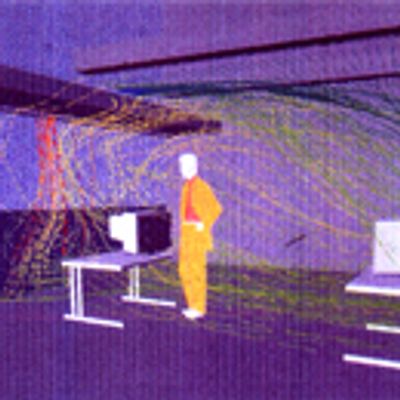
Sophisticated computer modelling techniques are now constantly being developed together with more accurate climatic data that allow building performance to be modelled in real time and for future climatic events. By using these techniques, buildings can be designed for many different moments of time, enabling them to meet comfort and energy/carbon efficiency requirements by responding to changes in the ambient environment.
Battle McCarthy incorporates a wide range of computer-based modelling tools to assist us and the design team in the understanding of the interaction between natural forces and buildings, enabling us to optimise building performance in response to the changing environment.
In addition, we believe that there is a continuous role for physical modelling tools. We are the only consultancy in central London to have a wind tunnel, Heliodon and access to an artificial sky, which allow us to explore the influence of the physical environment in a more reactive manner with architects and planners.
By using these tools from the outset of the design process we are able to test ideas and options at concept design stage, in order to ensure that the chosen solution will meet expectations in terms of technical performance, environmental impact and economics. Our approach is to address the issue of sustainable development in an integrated way throughout our assessments, using:
- Daylight and shadowing
- Requirements for artificial lighting
- Natural ventilation demand
- Thermal performance of facades during different seasons / worst case scenarios
- Accurate and informative advice on renewable and/or state of the art energy efficient technologies
- Nationwide / internationally recognised benchmarks and standards such as:
- Environmental Impact Assessments (EIAs)
- BRE Environmental Assessment Method (BREEAM),
- Leadership in Energy Management and Environmental Design (LEED)
- Standard Assessment Procedure (SAP),
- iSBEM
- Part L2 2006 (using the TAS simulation software)
- ASHRAE standard 90.1 1989.
- Title 24 (2001) seminars
Our work has included both the coordination and production of the Environmental Impact Statement (EIS) as well as technical expertise in the assessment of sustainable development, microclimate, energy, water and landscape and ecology.
We are also experienced in analysing international building projects and have achieved significant energy/carbon savings for our clients through the use environmental analysis. We are experienced in handling projects with needs and issues that are unique to their location, and will ensure carbon emission / energy savings are accurately determined and feasible in reality.