


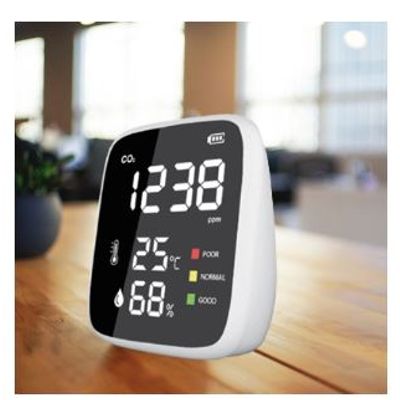
CO2 and Indoor Air Quality (IAQ) Monitoring Services
PP-L Biosafety specializes in CO2 and indoor air quality (IAQ) monitoring services aimed at enhancing workplace safety and health. They provide comprehensive solutions for measuring and managing carbon dioxide levels, acknowledging that CO2 at room temperature is a colorless and odorless gas which, at elevated concentrations, may pose health risks. The service emphasizes the importance of maintaining CO2 levels well below the legal indoor limit of 5000 ppm, noting that even at 1000 ppm, cognitive functions in workers can be affected. This initiative is especially pertinent in contexts like the COVID-19 pandemic where proper ventilation is critical to reducing airborne transmission risks. By utilizing historical data, PP-L Biosafety demonstrates the effectiveness of keeping CO2 levels below 600 ppm to mitigate infection risks of diseases like tuberculosis. The service can also be paired with UV-C disinfection solutions to further reduce pathogen transmission and ensure clean air in workspaces.
Carbon Dioxide (CO₂) at room temperature, is a colourless and odourless gas which, when concentrations build high enough, can cause employees and visitors in your buildings to become ill. Therefore, regular CO2 monitoring and testing is vital in creating a safe working environment.
The legal limit of CO2 concentration in an indoor setting is 5000 parts per million (ppm), however this is well above the concentration needed to be able to feel the effects of the gas. Even at around 1000 ppm, a loss of decision making is apparent in the workforce.
In the COVID-19 era, ventilation and air quality are directly linked to COVID-19 infection risk. Improved airflows are essential to dilute concentrations of potentially viral infected air from infected individuals.
Measure CO₂ levels
A quick and easy way to check the quality of ventilation in a space is to measure CO₂ levels.
This strategy has been used to successfully combat the spread of tuberculosis (TB); a deadly airborne pathogen just like COVID-19 but which has a significantly higher mortality rate and is harder to inactivate.
Historical data has proven that during a TB outbreak, CO₂ concentrations above 1000 PPM significantly increased the risk of becoming infected. Improving the building ventilation to a CO₂ concentration of 600 PPM stopped the outbreak in its tracks.
Combine with UV-C disinfection solutions
The use of UV-C disinfection solutions has also been shown to stop the transmission of TB. This leads us to conclude that, together, CO2 testing and UV-C disinfection will have a game-changing effect in suppressing the COVID-19-pandemic.