

- Home
- Companies
- Chem-Aqua, Inc.
- Services
- Chem-Aqua - Comprehensive Cooling Water ...
Chem-Aqua - Comprehensive Cooling Water Treatment Solutions
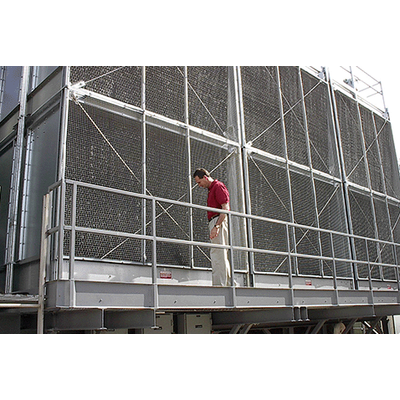
At Chem-Aqua, we understand that effective cooling water treatment is essential to keeping cooling tower systems, evaporative condensers, chillers, and closed loops running at optimal performance. Our comprehensive 360° Get Clean, Keep Clean™ Approach allows us to design a water treatment program to your business’s specific needs, increasing sustainability while reducing energy, water, and operational costs.
Significant Challenges with Cooling Tower Systems
Cooling systems are susceptible to various water-related issues that can impact their efficiency, effectiveness, and safety. Without a tailored cooling water treatment program, these issues can lead to equipment failure, production downtime, added costs, reduced efficiency, and Legionella-related risks
Scale Deposits
Mineral build up, such as calcium and magnesium on heat exchanger surfaces, can significantly reduce heat transfer efficiency, ramp up energy consumption, and operating costs.
Corrosion
Untreated water can lead to metal deterioration in cooling tower systems, leading to equipment failure, costly repairs, and production downtime.
Microbiological Growth
Uncontrolled microbiological activity can lead to reduced heat transfer, potential equipment damage, clogged pipes, and an increased risk of Legionella.
Fouling
The accumulation of debris, sediment, and microbiological growth in cooling tower distribution systems, tower fill, and other components cause restricted water flow, water quality issues, and heat transfer inefficiency.
Inefficient Water Use
Excessive blowdown, leaks, and overflow result in unnecessary water consumption within cooling tower systems and the loss of valuable treatment chemicals.
White Rust
Porous white deposits that can form on the surface of galvanized steel can compromise protective coatings and reduce the corrosion resistance of components, weakening overall structural integrity.
Improved Efficiency
Water savings
Energy savings
Enhanced Reliability
Extended equipment life
Reduced maintenance
Increased Safety
Environmental compliance
Legionella Risk Management
Sustainably Clean
Preventative cleanings
Achieve sustainability goals