


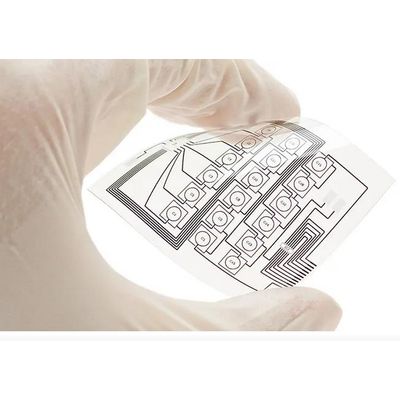
Electronics Design Service
LuphiTouch has strong electronics engineering team which can provide the electronics design service for our clients’ user interface projects. The clients just need give us their wanted function and features, then our experienced engineers will develop the circuit diagram as per them and then make circuit drawings like Gerber file. After that our engineers will also select components to make BOM list accordingly.
Below are the details of our electronics design service for your user interface module projects:
-
dentify the functional, performance, and design requirements for the electronic system.
-
Define the inputs, outputs, and target specifications such as power consumption, size, weight, etc.
-
Develop the overall system architecture and block diagram.
-
Select the appropriate electronic components, microcontrollers, or integrated circuits (ICs) to meet the requirements.
-
Determine the interconnections and data flow between the various subsystems.
-
Design the detailed electronic circuits, including analog and digital circuits, power supplies, and interface circuits.
-
Use circuit analysis techniques, such as Kirchhoff`s laws and Thevenin/Norton equivalents, to ensure the proper functioning of the circuits.
-
Simulate the circuits using software tools to verify their operation and identify potential issues.
-
Create the layout of the PCB, arranging the electronic components and routing the interconnections.
-
Consider factors such as signal integrity, power distribution, thermal management, and electromagnetic compatibility (EMC) during the PCB design.
-
Use computer-aided design (CAD) tools to create the PCB layout and generate the manufacturing files.
-
Select the appropriate electronic components, such as ICs, resistors, capacitors, and connectors, based on the circuit design and availability.
-
Ensure the selected components meet the performance, cost, and availability requirements.
-
Procure the necessary components from reliable suppliers.
-
Build a prototype of the electronic system using the designed PCB and components.
-
Test the prototype to verify its functionality, performance, and compliance with the requirements.
-
Identify and address any issues or design flaws through iterative testing and modifications.
-
Perform further testing and validation to ensure the electronic system meets all regulatory, safety, and environmental requirements.
-
Obtain necessary certifications, such as FCC, CE, or UL, depending on the application and target market.
-
Create comprehensive documentation, including schematics, PCB layouts, bill of materials, and assembly instructions.
-
Prepare the design files for manufacturing and transfer them to the production facilities.