

- Home
- Companies
- Rockford Combustion
- Services
- Field Services
Field Services
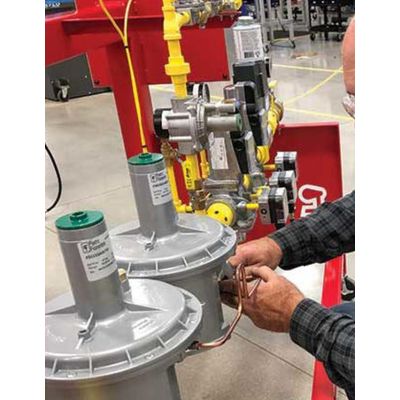
A valve safety train controls the flow of fuel into thermal processing equipment. By controlling the desired ratio of fuel and air, the connected burner then properly oxidizes the mixture, safely releasing the energy needed to heat your furnaces, boilers, HVAC heaters, thermal oxidizers and other equipment. In turn, the thermal process equipment performs critical production tasks such as drying gypsum boards, roasting and baking foods, heat-treating metals, fluid heating, and pollution control.
Owing to the presence of hazardous vapors and gases, poorly designed or inadequately maintained trains have led to catastrophic explosions, fires, asphyxia and burns, multi-million dollar loses, injuries and fatalities. A recent study of equipment explosions over the last decade discovered more than 20 incidents that resulted in nearly 50 injuries and fatalities. Thankfully, you can significantly reduce the potential for accidents by getting regular safety inspections.
Rockford Combustion Solutions provides field services including combustion and oxy-fuel system tuning to maximize efficiency and decrease combustion safety risks, preventative maintenance to keep systems running smoothly and identify opportunities for improvement, and start-up and commissioning to ensure new equipment is properly and quickly installed to manufacturer and code requirements. Other field service offerings include equipment upgrades and repairs, electrical reviews and debug, gas booster maintenance, furnace optimization, testing for NOx and other flue-gas emissions, and more.
The field service team utilizes numerous checklists to screen fuel-delivery systems and equipment for NFPA/ANSI/ASME/NEC/EPA code compliance, identify installation-operational-maintenance issues, provide information on technological advances and best practices, and uncover training deficiencies. Inspections utilize proprietary software and include formal reporting, including a detailed list of all findings including critical issues that may impact life safety. A cloud-based customer portal helps managers track issues from identification to resolution. Technicians and engineers can troubleshoot burner management systems, diagnose operational issues, analyze test emissions, perform calibrations, review wiring schematics, and more.
The last time your equipment went down maintenance quickly returned it to service. Great. Now the equipment is running. But were the correct repairs done? Were components correctly installed and function tested to ensure they are fail safe? Was the underlying root cause ever found and truly fixed? What if the building gas regulator failed, would the incoming pressure surge overwhelm your equipment? Is your outdoor equipment properly rated for the electrical environmental hazards? Is the furnace you want to repurpose suitable for the new operating conditions? Really, just how safe are you? These are all difficult questions, and we can help with all of them.
Whether it be an existing system, a repair, a refurbishment, or a new equipment being brought to your site, our Compliance Audits assess these details and provide guidance. A Compliance Audit can usually be conducted while the appliance is operating. Often no scheduled down time is necessary. We review what you have, and what you need to comply with current code and safety guidelines, whether it be an NFPA rated appliance or a boiler. Let us help.