

- Home
- Companies
- Environmental Leverage Inc.
- Services
- Filamentous Identification Analysis & ...
Filamentous Identification Analysis & Training
I don`t have filaments at my plant!!! You might want to check again. A common misnomer in many waste water treatment plants is that unless they have filaments that are bridging and they can see them between the floc structures, they do not have filaments. In reality, internal bulking can cause more problems than slight bridging. Many plants think there is only a problem when they have external filaments that are causing bulking problems. In reality there are three ways to cause bulking at a plant, internal filaments, external filaments or non-filamentous bulking- which can be caused by Zooglea, fungi and in many municipalities or paper mills, fiber or tissue.
What is the difference and how do they impact the plant? Let`s take a closer look at all of these scenarios.
Filaments can be internal, external or free floating. Internal filaments are like a sponge. They can be hard to settle and dewater. External filaments keep the floc structures from coming together and compacting. Free-floating filaments can cause TSS problems. Zooglea and fungi can cause foaming, sliming or bulking.
Let`s first look at some samples from a few plants that have external bulking and what most operators think is the only case for filamentous problems. External filaments are those filaments that extend into the bulk solution and cause difficulty in settling. They form a bridge between the floc structures and make compaction difficult. They can take up large amounts of space in a clarifier or digestor or even aeration basin.
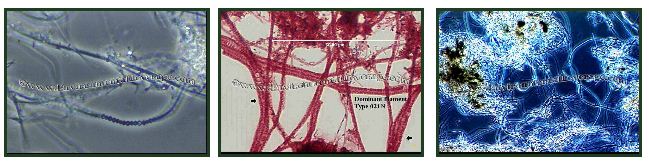
It is easy to pick out the filaments extending from the floc structure.
The first photo shows the start of bridging, the second photo from a plant has abundant levels of filaments and the last one has excessive levels of filaments. This will make it hard to settle in the clarifier, hard to dewater and increase polymer consumption and increase solids hauling costs. This is typically what people think of when they talk about filamentous bulking. While you may think you have a large amount of bacteria when doing a Settleometer, in reality, the filaments are just taking up more space.