- Home
- Companies
- Alpha Waste Solutions LLC
- Services
- Grease Trap Cleaning Service
Grease Trap Cleaning Service
It is crucial to maintain grease traps working properly to prevent major problems. All materials removed from the traps must be appropriately disposed of in an eco-friendly and efficient way. This is why it is necessary to hire a reputable company which is licensed and insured such as AWS that will properly dispose of your trap waste at a licensed facility and where the grease will be recycled into something useful, such as biodiesel. Routine cleaning is essential for preventing grease build up in order for a grease trap to work efficiently that is why you need to contact our company to take care of your waste removal needs
What is a Grease Trap anyways
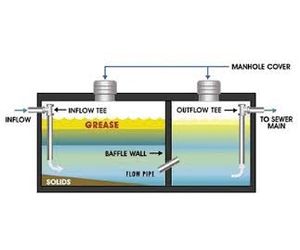
Grease trap interceptors are boxes that are added onto drains, where the kitchen water waste flows though before it goes thru sanitary sewer lines, public waste systems or septic tanks, where it can clog the lines and cause all kinds of destruction in the sewer system.
Grease or animal fats and vegetable oils, is less dense, or lighter than water. Grease does not mix with water they will float to the surface and are trapped inside the receptacle using a system of baffles. The captured grease and oils fill the trap from the top down, displacing “clean” water out of the bottom of the trap and into the sanitary sewer line. This is why you see a grease “layer” when observing a grease trap. When a significant layer of grease has accumulated, the trap must be cleaned out.
Restaurants have much greater quantities of grease waste than the average homes; therefore, cleaning the traps is required more often.
While it is highly-important to execute maintenance work on traps frequently, it depends on how often and how much grease goes through the drain into the grease trap interceptor as to exactly how often it should be cleaned. The state requires that you have the grease trap cleaned every 90 days. The objective is to keep the grease trap as clean as possible on a regular basis by removing the oil residue and disinfecting the trap with an antibacterial solution.
As your next food service inspection comes up, take the first conscious step to avoid those fines and help the environment.
The following link is a helpful PDF file from the NYC.GOV website for food service owners to know what to expect in their upcoming food service inspection.
Items 5A and 10B are related to the disposal of waste materials and the proper maintenance of sewer lines.