- Home
- Companies
- Ballast Nedam Environmental Engineering
- Services
- Ground Treatment
Ground Treatment
Ballast Nedam Environmental Engineering specializes in the active treatment of contaminated ground. We can provide innovative, tailor-made solutions for treating ground, dredge spoil and mineral residues. Using portable installations and biological treatment techniques, we can treat contaminated ground on the remediation site or at one of our own locations. We remove all hazardous substances from the soil, after which the treated ground can be used for a range of purposes.
Extractive soil decontamination involves using a stationary or portable washing installation to separate clean and contaminated soil particles. This technique is particularly useful when treating contaminated sandy ground, whereby we can remove practically all the inorganic and organic contaminants. We use our own physical-mechanical sieving installation, in which we can cleanse soil, sieved sand and crushed sand, sweeping residue, gravel and rubble. In addition, we have a quay and substantial storage and receiving facilities for both wet and dehydrated materials.
Thermal ground treatment involves heating the soil by means of a stationary or portable rotary kiln, whereby the organic contaminants evaporate. We collect and purify the gases that escape. The thermal installation is powered by natural gas and/or high caloric waste products.
Ballast Nedam Environmental Engineering can optimize the condition of ground contaminated with organic substances by means of biological ground treatment using various remediation techniques:
- heating the soil
- ventilating the soil/ground
- adding nutrients
- optimizing the soil humidity
We often advise using a combination of these techniques for the very best results. Ballast Nedam Environmental Engineering has various locations that can be used for biological remediation and for storing ground, rubble, dredge spoil and residual fraction.
Complex soil contamination requires tailor-made in-situ remediation techniques. In practice, we often use a combination of techniques to achieve the optimum remediation results.
| Methode | Removes | From |
|---|---|---|
|
Bioslurping/Biosparging |
floating sediment layers |
ground (water) |
|
Soil air extraction |
volatile contaminants |
ground |
|
Bio venting |
non-volatile contaminants |
ground |
|
Air sparging |
volatile contaminants |
ground water |
|
Chemical oxidation |
dissolved contaminants |
ground water |
|
On-site-container |
non-volatile contaminants |
ground |
|
Aerobic and anaerobic biodegradation |
non-volatile contaminants |
ground |
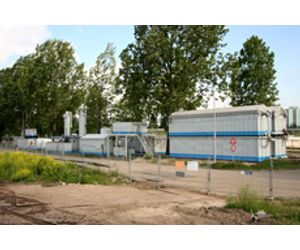
Ballast Nedam Environmental Engineering has developed a number of portable installations designed for treating soil on site, and dehydrating and separating dredge spoil, gravel, rubble and sand. This can be a good alternative to large-scale transport to processing plants. The portable installations are compact and therefore particularly useful for remediation projects in inner city areas.