


Hazardous Releases Services
The modelling of hazardous releases can be required for emergency situations, such as a liquid spill, catastrophic failure of a tank or rupture of a pipeline. Toxic or flammable substances, such as ammonia, chlorine and Liquid Natural Gas (LNG), are often considered.
Most popular related searches
hazardous release
liquid spill
pollution modeling
flammable substance
exposure limit
environmental consulting
expert witness
hazard assessment
toxic exposure
spill modeling
- These assessments may be required by regulators such as the UK Health and Safety Executive (HSE) for Control of Major Accident Hazards (COMAH) assessments.
- Scenarios can be complex, requiring investigation of emission characteristics and dispersion pathways under different meteorological conditions.
- Depending on the nature of the release, CERC`s industrial pollution model ADMS or dense gas model GASTAR, or a combination of the two, may be used. If the initial source of the release is a liquid spill, CERC`s model LSMS may be used to determine emission rates to air.
- Depending on the situation, model outputs may be compared with a range of threshold values, such as toxic loads (doses), exposure limits and flammability levels.
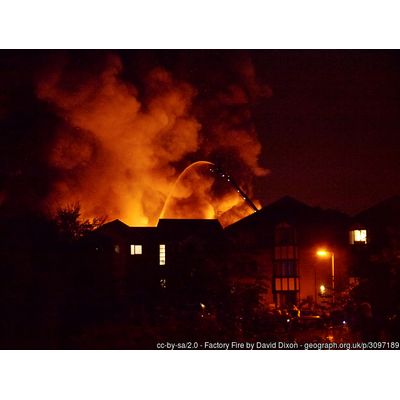
- We also use ADMS to assess the likely impacts of uncontrolled combustion, such as waste or warehouse fires, or emergency flaring.
- CERC has worked behind the scenes on several recent high-profile legal cases. We can provide expert advice and Expert Witness services to support our findings.