


- Home
- Companies
- VIG Sp. z o.o.
- Services
- HAZARDOUS WASTE RECOVERY
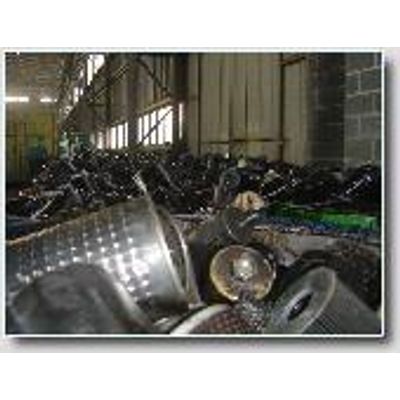
HAZARDOUS WASTE RECOVERY
Industrial Waste Processing Plant in Myszków offers the possibility to professionally and properly manage the above mentioned waste through full waste recovery while utilizing the available technology and the most modern line of that type in Poland. The line to recover waste oil, fuel and air filters meets all requirements of regulations on processing of waste oil-containing filters and matches the latest trends in far-reaching recovery of full-value recyclable materials.
HAZARDOUS WASTE RECOVERY
Basic part of our activity is the collection and recovery of hazardous waste in the form of waste oil, fuel and air filters, sorbents and oiled working cloths of the following codes:
16 01 07* - Oil filters
16 01 21* - Fuel filters
16 01 22 - Air filters (or 15 02 03)
15 02 02* - Sorbents, filtering materials (including oil filters not included in other groups), wiping fabrics (e.g. rags and cloths) and protective clothing contaminated with hazardous substances (e.g. PCB)
15 01 10* - Packagings containing hazardous substance residues or contaminated with such substances
Input material are various filter types. The main assumption is to separate all materials they are made of to further use those materials.
Waste comminution is performed in a crusher where the waste is comminuted to 30 mm particles. The waste is further conveyed via a system of feeders to a centrifuge. It is possible to obtain clean fraction, free from any contamination through separation of oil from other materials in the centrifuge. Centrifugal force separates the oil from the rest of the material and directs it through tight pipes to an oil storage tank. Dried material which is a mixture of filtering cord, comminuted rubber washers and comminuted metal is carried away, using belt feeder, to a ferrous metal separation station. Due to trace amounts of oil derivatives the filtering cord is a high-calorific-value additive to low-calorific-value fine coal or biofuels.
Separation of filtering material from metal which is a commodity intended for further processing in steel plants is possible thanks to the use of a magnetic metal separator.
The employed method for processing of waste filters and other oil derivative waste does not produce other waste to be stored. Using overband magnet placed laterally above the band conveying particles of metal filter housings are pulled out and fed to the container intended for metal storage. Filtering cord, free from oil and metal, is transported directly to a container intended for the storage of cord. As the need arises the oil, metal and cord containers are emptied.
Oil is sucked out of the storage tanks and fed to tankers which transport it further to a refinery. Metal and filtering cord tanks are replaced with fork lift trucks and the material is prepared for further transportation (metal is moved to steel plants, textile cord is directed to mixing stations).
The technology employed to recover waste oil filters is a purely mechanical processing without addition of any supporting chemicals.
The entire system is tight so oil cannot escape during comminuting and processing.