

- Home
- Companies
- Shanghai Weiwang Technology Co., Ltd.
- Services
- Hydrant Flow Testing Service
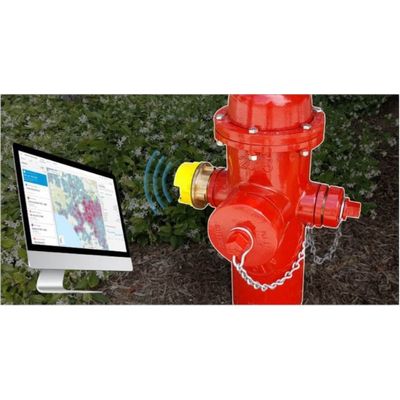
Hydrant Flow Testing Service
Regular fire hydrant testing ensures the ability to provide water at an acceptable pressure and flow rate for public health and firefighting operations. Most jurisdictions also require hydrant flow tests to design fire sprinkler systems for commercial or residential structures.
The 2019 edition of NFPA 291: Recommended Practice for Fire Flow Testing and Marking of Hydrants (4.1.3) recommends that fire hydrants should maintain a residual pressure of 20 psi (pounds per square inch), or 1.4 bar, for effective firefighting, as well as to prevent backflow that could contaminate the public water supply.
NFPA 291 stipulates hydrant flow tests every five years to ensure that changing conditions in the piping and system demands won’t impede hydrants’ ability to deliver water.
From the 2019 edition of NFPA 291 4.13.1 Public fire hydrants should be flow tested every 5 years to verify capacity and marking of the hydrant. In the explanation that accompanies the section (A.4.13.1), NFPA clarifies the section’s intent. It states that it does not mean to mandate routine five-year testing of every hydrant—especially if there is no pressing need to test a specific hydrant or if test data less than five years old is available from an adjacent hydrant on the same grid.The middle of a fire emergency isn’t the right time to discover fire hydrants don’t work as expected.
Performed by city officials or professional contractors, fire hydrant testing verifies the performance of a city’s water distribution system, determining the pressure and rate of flow available at various locations. It measures static (non-flowing) and residual (flowing) pressure, as well as the rate of discharge in gallons per minute (GPM) of each fire hydrant.