

Identification and Analysis of Coal Tars
All utilities arisings, except small and unplanned works, must be classified as hazardous unless proved to be non hazardous, and with the imminent withdrawal of RPS 211 that will expand to all arisings.
It is expensive to incorrectly classify waste as non hazardous if it is hazardous. Substantial fines and prosecution may be a consequence. Correctly classifying waste need not be expensive, however. It can be done on the spot, at low cost and be compliant. WM3 asks that “where possible” analysis should be done by a UKAS accredited laboratory, but restrictions of time and expense frequently mean that this is not possible. You can get accurate test results with the QED at low cost within minutes, saving time and costs and allowing more samples to be taken if necessary.
The main reason for tarmac/asphalt arisings being hazardous is the presence of coal tar in the road binder. However, not all road binder will contain coal tar, or if it does it may not be at a hazardous concentration.
Bituminous mixtures containing greater than 0.1% coal tar are hazardous (Code 17 03 01), but non hazardous (Code 17 03 02) if the coal tar content is less than 0.1% or the Benzo a Pyrene concentration of the coal tar portion is less than 0.005%. The QED gives you the percentage of coal tar present, plus the BaP content which is important for WM3 compliance.
Coal tar is not a petroleum hydrocarbon and so will not be picked up in normal TPH testing. This can lead to incorrect results from laboratory data unless coal tar testing is specifically asked for.
Coal tar and bitumen are both made up of around 10,000 PAHs, some carcinogenic and mutagenic, some ecotoxic. The standard GC-MS and GC-FID laboratory testing only analyse 16 of these, whereas the QED analyses thousands, including BaP, giving a much truer picture of the presence of hazardous PAHs.
PAK test spray is frequently used to test for coal tar but is unreliable and cannot be used in wet or cold conditions, making it unsafe to rely on, particularly in the UK.
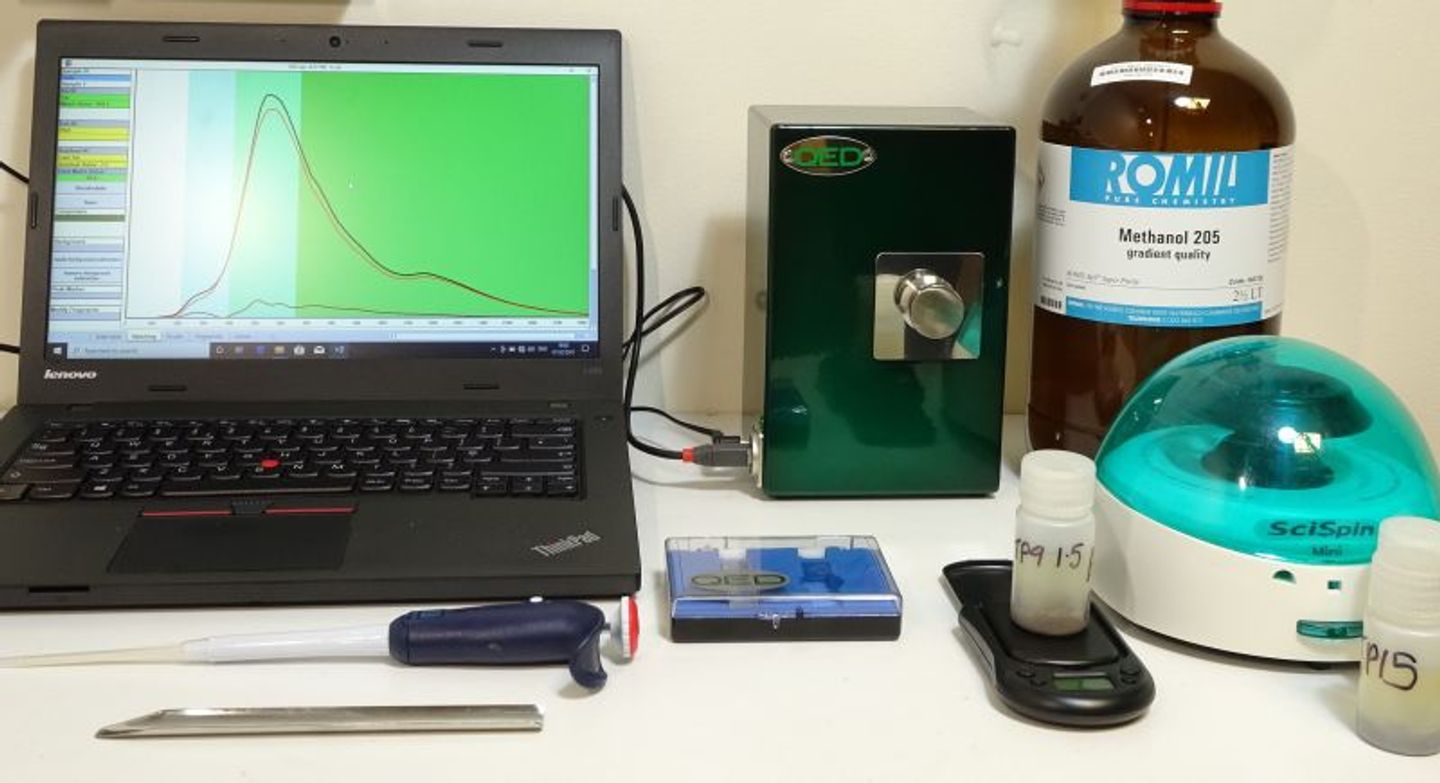
Chemical analysis is the only way to identify if coal tar is present in tarmac, but this is not time consuming, difficult or expensive when using the QED HC-1 analyser. We have refined the process to “shake, dip and read,” which takes about 20 seconds, involves no data entry (unless records are needed) and can be done by anyone, anywhere. The QED automatically generates a results page (below.)
The QED produces these results immediately, and provides all the information needed to correctly classify the road binder type. In the Sample ID column, a red box shows if the sample is hazardous. The final column gives you the road binder identification with a percentage certainty in the result. You are also given the coal tar content as a percentage of the road binder, the percentage of BaP and the BaP content in mg per kg. It’s a simple, reliable and effective method.