


- Home
- Companies
- Filtermist Limited
- Services
- Industrial Dust Extraction Services
Industrial Dust Extraction Services
- Protect people from dust related health hazards
- Prevent explosions
- Reduce housekeeping and minimise breakdowns
- Improve product quality by preventing cross contamination
- Protect the environment
COSHH (Control of Substances Hazardous to Health) regulations require all employers to protect employees from potentially harmful effects of certain dusts in the workplace, whilst external atmospheric pollution is controlled under EPA (Environmental Protection Act) legislation.
Potentially explosive dusts can be handled by using appropriately rated ATEX equipment. All of our dust extractors and collectors come with ATEX rated options meaning potentially explosive and volatile products can be handled safely in line with the Dangerous Substances and Explosive Atmospheres Regulations (DSEAR) where applicable.
Visit the HSE`s dedicated Dust Hub to find out more about the dangers of dust.
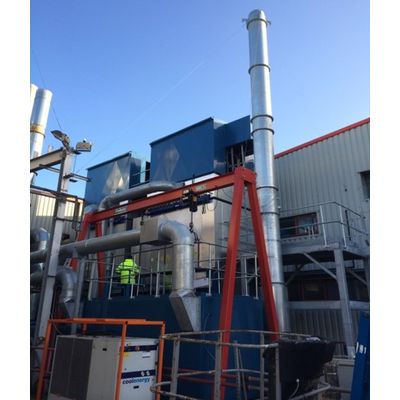
A dust extraction system is a combination of capture hoods, ductwork systems, a dust collector, and an extraction fan. Dust extraction systems are used to remove, convey, filter and collect dust generated from various industrial processes.
Typically used in industrial environments, these systems are designed to extract and clean contaminated air to ensure safe working environments inside factories and to reduce environmental impact.
Removing dust from a working environment is a necessity to remain HSE compliant and to keep employees safe. It is also enforceable by law.
The dust is filtered and collected using a specific type of filter unit which is selected based on the characteristics and amount of dust being handled. For most industrial applications a filter unit with an automatic cleaning system is required due to the expected dust load; static (non-cleaning) filters are usually not suitable due to reduced filter life and inconsistent performance.
The filter unit can utilise dry filter elements inside it such as cartridges, cassettes, or bags to separate the dust from the air stream or alternatively wet filtration technology can be employed whereby the dust is separated by passing the air stream through water which can also eliminate explosion risks when handling highly volatile metal dusts such as aluminium and titanium. Peripheral devices can also be employed on dust extraction systems to provide additional features or safety such as explosion relief / suppression devices, in-line valves to prevent explosion propagation back through duct systems and in-line separators such as spark arrestors or cyclone separators which are used up-stream to offer protection to the filter unit.