


Mercury Sampling Services
In order to meet the rapidly developing needs of industry,GCI`s Mercury Division offers specialized Mercury sampling services.
- Method 29 Determination Of Metals Emissions From Stationary Sources
- Method 30B Determination Of Total Vapor Phase Mercury Emissions From Coal-Fired Combustion Sources Using Carbon Sorbent Traps
- Method 30B – Mercury Speciation Measurement of Oxidized and Elemental Mercury Using Sorbent Traps
- Method 101A Determination Of Particulate And Gaseous Mercury Emissions From Sewage Sludge Incinerators
- ASTM D6784-02 Standard Test Method For Elemental, Oxidized, Particle-Bound, And Total Mercury In Flue Gas Generated From Coal-Fired Stationary Sources (Ontario Hydro Method)
- On-site Sorbent Trap Analysis
- Over 25 years RATA Testing Experience
Hal Stiles, Director ofGCI’s Mercury Division, has assembled a team to specifically meet the demands of Mercury Testing and Mercury Characterization Testing. Over the last twenty-five years, Mr. Stiles has directed hundreds of Mercury testing projects.
In 2007, Test Method 30B (sorbent trap sampling) was added toGCI’s list of Mercury testing capabilities that already included Test Methods 29, 101A and ASTM D6784-02 (Ontario Hydro). Since then we have built a large 30B sampling equipment inventory that allows us to sample at multiple locations simultaneously.
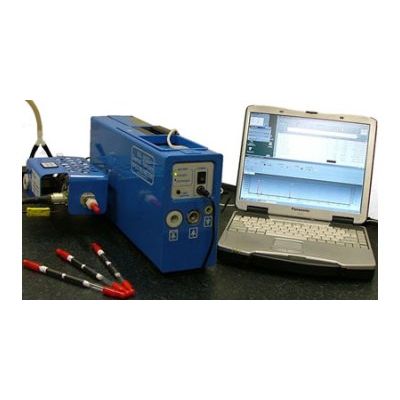
To further meet the needs of Mercury CEMS evaluation and to support Injection Study test programs, theGCIMercury Division is equipped with three Mobile Laboratories capable of completing on-site sorbent trap analysis using the Ohio Lumex RA-915+ analyzer.
High Temperature / Dust Loading Environments using 30B
In order to meet the need of its clients, GCI expanded and improved its sorbent trap testing capabilities to be able to measure mercury upstream of the stack exit, at points in the effluent stream where high temperature or high dust loading would typically prevent the application of sorbent tube sampling. To account for these conditions, GCI follows the following procedure to ensure results are as accurate as possible:
- In high temperature locations, air - cooled probes are used with an electric blower, compressed air, or plant air to lower the temperature of the sorbent traps in the gas flue to approximately 210 ° Fahrenheit.
- To compensate for “dirty” or “high dust” situations, sheaths are attached to the end of the probe, extending past the trap inlet to avoid direct contact with particulate. In addition, an extra glass wool plug “pre- filter” (designed by Ohio Lumex) is used at the inlet tip of the trap to keep any particulate that makes it past the sheath out of the sections that will be analyzed.
- Loose particulate that may be collected on the pre-filter is removed and can be analyzed separately. The remaining pre-filter is included with the first sorbent section and reported as oxidized Mercury.