

Municipal Solid Waste as Source of Renewable Energy
Municipal solid waste is used in several energy-intensive industries as an alternative fuel. Biomass fraction of MSW is determined using ASTM D6866. Beta Analytic continues to provide ASTM D6866 testing to MSW users.
In its proposed greenhouse gas mandatory reporting rule, the U.S. EPA states that facilities combusting MSW should use ASTM D6866 to determine the biogenic portion of their carbon dioxide emissions.
The Western Climate Initiative`s Essential Requirements for Mandatory Reporting also require ASTM D6866 testing to measure the biomass percentage of carbon dioxide emitted from general stationary combustion units using mixed fuels and waste-derived fuels. This mandate also covers MSW, which the WCI considers as a waste-derived fuel.
Similarly, California’s AB32 recommends ASTM D6866 testing for biomass determination of emissions from general stationary combustions units in the cement and electricity-generation industries. California is a member of the WCI.
A UN Clean Development Mechanism methodology, the AM0025, also requires project owners dealing with solid waste management projects to use ASTM D6866 when estimating the fossil carbon percentage in emissions from waste-derived fuels such as municipal solid waste.
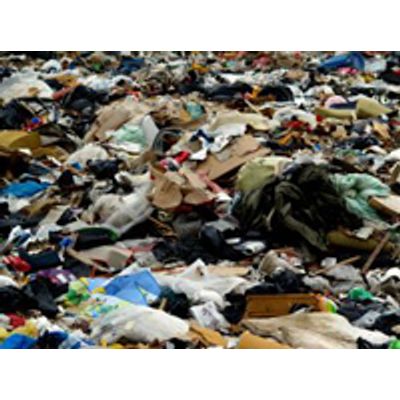
Commonly known as trash or garbage, Municipal Solid Waste (MSW) is any “solid phase household, commercial/retail, and/or institutional waste,” according to the U.S. Environmental Protection Agency. MSW consists of everyday items like papers, grass clippings, plastic bags, furniture, clothing, bottles, rubber, metals, food scraps, paint, and batteries. MSW does not only come from residential sources but also from commercial (office buildings, retail and wholesale establishments, restaurants), institutional (libraries, schools, hospitals, prisons), and industrial sources (packaging and administrative). Most wastes classified as MSW are non-hazardous.
As part of their solid waste management program, numerous states in the U.S. are promoting source reduction, recycling, and composting to reduce landfill disposal. Several states have also adopted material disposal bans—leaves, grass clippings, general yard waste, office and computer paper, newsprint, corrugated cardboard, paperboard, glass, plastic, aluminum, and steel containers are banned from disposal facilities.
Many facilities burn MSW at high temperatures not only to reduce their waste volume but also to generate electricity. Though not the most environmentally sound strategy for MSW, combustion of MSW with energy recovery is preferred by the U.S. EPA over landfill disposal and incineration without energy recovery.
When MSW is combusted at high temperatures, energy is produced and recovered as heat or steam. The amount of energy produced by burning MSW is not fixed but dependent on the waste stream composition. The non-biogenic components of MSW, e.g. plastics, typically have higher heat content per unit weight than biogenic materials like paper.
According to a U.S. Energy Information Administration report released in May 2007, the energy content of MSW (expressed as Btu per ton) has steadily increased over time while the percentage of total energy content that comes from biogenic resources has decreased. This increase in total energy content is attributed to increased volume of plastics and other non-biogenic materials in the waste stream. Energy from biogenic resources decreased not only because of the increased volume of plastics but also because paper and paperboard, which make up a large percentage of MSW in the past, are now being recycled instead of burned.
Trends notwithstanding, a significant portion of MSW is still biomass; thus MSW is still a good source of renewable energy. Many regulatory bodies, including the EPA, consider energy from the biogenic fraction of MSW as renewable.