- Home
- Companies
- Ansini Limited
- Services
- Ansini - Plastic Vacuum Forming ...
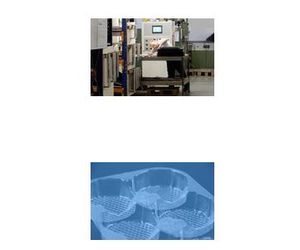
Ansini - Plastic Vacuum Forming Services
Ideally suited to low to medium-volume batch production, or very large-format assemblies, plastic vacuum forming offers a cost-effective alternative to injection moulding, which often involves a significant investment in tooling. Our considerable expertise in vacuum forming plastic, particularly when it comes to material selection and manufacturing, means that we are able incorporate a diverse range of processes and products.
What are the advantages of Vacuum Forming?
Plastic forming has many benefits over other types of forming. When vacuum forming plastic, low forming pressures are used which enables the use of lower cost tooling and cheaper materials for the mould. This also leads to a reduced lead time for tooling manufacture, more cost effective vacuum forming products and more economical prototyping.
Whatever your product or industry, our plastic forming production specialists can advise on the best manufacturing process to give you the best solution for your budget.
Learn more about the plastic vacuum forming process.
Make to Print
Make to print plastic components are where they are designed, materials specified and tested by your company. The supplier only becomes involved solely to manufacture the products to the specification requested and will have no other input on the design or testing of the plastic components.
The make to print process is suitable for a variety of plastic parts which can range from small mass produced pieces to larger, more unique projects. Our make to print parts can be manufactured through the vacuum forming or thermoplastic forming process.
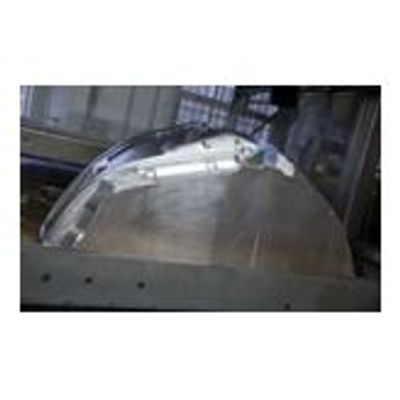
Furthermore, our make to print plastic components are finished to a high standard by one of our eight, industry-leading, Maka 5 Axis CNC machines which can meet even the most complex machining and trimming requirements.
Technical Capabilities
- Large capacity mould machinery – a total of 10 machines up to 2M x 1M
- Material thicknesses of between 1.0mm and 8.0mm
- Plastics used include ABS, PP, HDPE, HIPS, POLYCARB and PETG
- Specialist aerospace materials including KYDEX and LEXAN
- Roll-fed machine thicknesses of between 0.25 – 1.0mm
Vacuum Plastic Forming is perfect for creating bespoke, unique items and components that can be applied to a spectrum of products that are used daily, in vehicles, medical equipment and more.
We have had the pleasure of working with a variety of businesses in different industries that have used Vacuum Forming as part of the manufacturing process.
What Are The Differences Between Vacuum Forming and Injection Moulding?
Both plastic forming and injection moulding are useful for creating custom plastic components and each process has its own unique benefits and drawbacks, depending on what they are required for.