

- Home
- Companies
- Dagaz Environmental Inc.
- Services
- Dagaz Environmental - Preventative ...
Dagaz Environmental - Preventative Action Measures Services
Excessive growth of algae and cyanobacteria can form floating clumps or scum on surface waters and seriously deteriorate the appearance of shorelines and water quality. The excessive growth can resemble a thick pea soup, be potentially harmful to people and animals, and emit a strong odour. Algae and cyanobacteria blooms are typically a sign of nutrient rich waters. The nutrients enter the water through municipal sewage/gray water, animal and poultry sewage, fertilizer, erosional deposition of nutrient and organic matter rich soil, and many other avenues. Low wind conditions, combined with optimal sunshine and nutrient rich waters, are key requirements for algae and cyanobacteria blooms.
Algae and cyanobacteria blooms can decrease water quality via:
- Murky, foul smelling water which limits its use for drinking and recreational purposes;
- Low oxygen levels resulting from decomposition of dead algae,cyanobacteria, plants and animals. Low oxygen levels can promote both summer and winter fish kills;
- Cyanobacteria (blue-green algae), which is actually not algae, have some species which are potentially toxic to mammals. The toxins produced by the cyanobacteria are known to kill livestock and pets, and cause serious illness in humans. Children should not be permitted to swim in cyanobacteria infected waters as a preventative measure. Control of cyanobacteria and aquatic plants with copper sulfate (bluestone) is not advised since, if the cyanobacteria species is one that produces the harmful toxin, the toxin will still be released upon its death and will still pose a health hazard. The copper sulfate is also toxic to other desired aquatic species including fish. The death of these other species can result in a disruption of the sensitive biotic balance in any aquatic environment.
- Water treatment costs increase due to plugging of filters and the potential need to increase chemical use prior to human consumption.
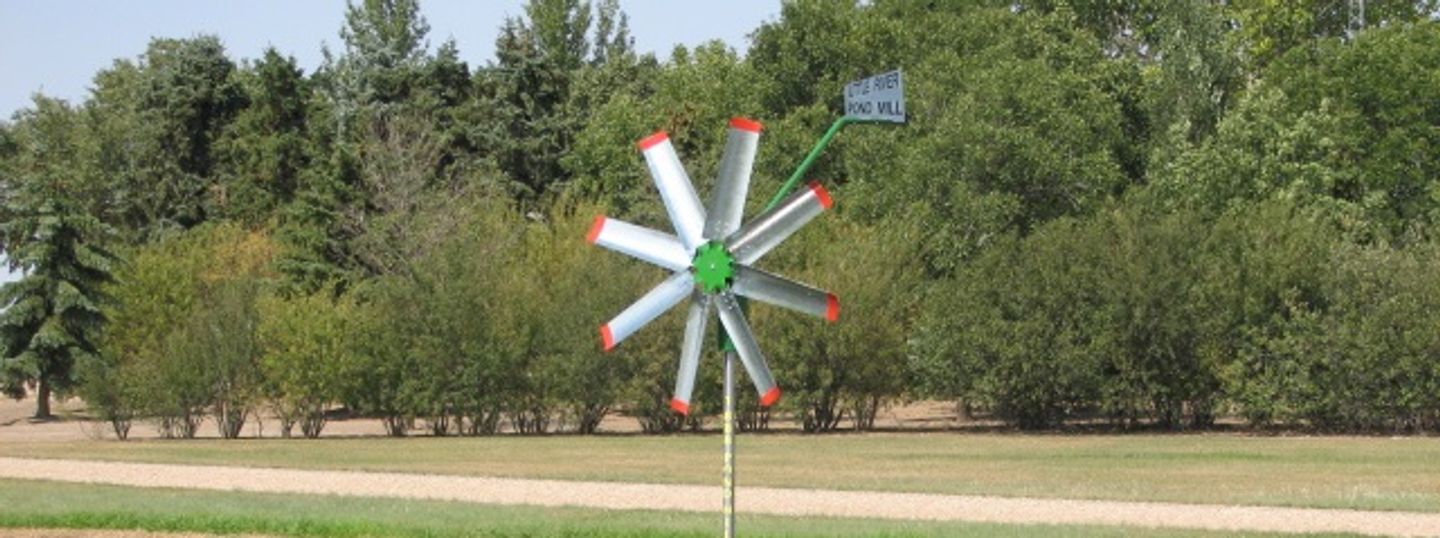
The Little River Pond Mill® circulator has been shown to decrease algae and cyanobacteria blooms on surface waters. The circulator facilitates an increase in species diversity, reverses the effects of eutrophication, increases competition for food, and decreases nutrient bioavailability - all are key components in the reduction/elimination of algae and cyanobacteria blooms.
Control of Eurasian Watermilfoil
Eurasian watermilfoil is a non-native (to North America) aquatic plant species which was apparently introduced to North America in the late 1800`s. By the mid 1980`s, this pest plant could be found in 33 states in the United States and in at least 3 Canadian provinces. Recreational activities, i.e. boating, appear to facilitate the spread of this plant. Since it is an introduced species it has no natural population controls, i.e. insects, bacteria, and fungi. This pest species has been shown to be very competitive with native aquatic species and in many cases is able to choke out or reduce native species diversity. This may also be an interaction of eutrophic conditions. Eurasian watermilfoil is not considered palatable by native aquatic and terrestrial grazers and therefore grows to the extent of the limiting nutrient, i.e. typically phosphorus.
The Little River Pond Mill® circulator has been effective in controlling Eurasian watermilfoil growth. In a study conducted on a 35 ha lake - Quebec, Canada - 1997, the pond mills reduced the required harvesting of the milfoil by up to 500% and have since eradicated the requirement for harvesting. The signs of eutrophication which had plagued this lake in the past had also been alleviated (D. Boudrias, 1997). The control measures which have been implemented through use of the Little River Pond Mill® circulator for control of the Eurasian watermilfoil include:
- Increased competition for nutrients;
- Increased aquatic species diversity;
- Chemical changes in nutrients thereby decreasing nutrient bioavailability; and
- Circulation and decreased water temperatures during winter months forcing the plant into a dormancy state of which it has no means of surviving through since it has no ability to store carbohydrates (no storage organs).
Preventing or reducing point and non-point source pollutants from entering the water is a measure which is key to remediation of the water, or in preventing the water from entering a eutrophic state. Point source pollutants are those which can be readily identified, i.e. a community emptying effluent into a river or lake, or a business emptying polluted cooling water into a reservoir,... Non-point source pollutants are those whose source is more difficult to identify conclusively, or at all. Examples of these could be:
- a livestock facility whose manure storage facility is leaking into an underground spring which has an outlet running into a lake 25 km downstream and for which the underground spring flows beneath 3 municipal sewage lagoons, and 5 livestock operations;
- runoff from a drainage basin which may contain a chemical recycling plant, 3 livestock facilities, 1 small town, and 11 farms (mixed or otherwise). Although certain nutrients and chemicals in the water may be identified, there is no conclusive evidence to state exactly where the pollutants originated from; and
- drainage from a community storm drain entering a lake or reservoir. You know that the drainage water comes from a certain community but you cannot conclusively determine the origin of any one pollutant.
Some preventative measures which can be taken to decrease the organic and nutrient load on surface waters:
- Insure there is a substantial grass buffer strip surrounding the surface water (dugout, lake, pond,...) This buffer strip should be sized in proportion to the surrounding drainage basin and the size of the water holding facility. The PRFA in Canada recommends between 5 and 50 meters. The larger the drainage basin and the steeper the surrounding land slopes, the larger the buffer strip should be to prevent erosional deposition of soil, organic matter, and nutrients from draining into the surface water. The grass buffer strip should be mowed to about 8 cm (3 inches) for optimal performance, and the clippings should be removed and composted elsewhere. Trees should be kept back at least 50 meters to deter leaves from entering the water supply;
- Insure drainage from livestock facilities does not drain directly into surface waters. This may involve changes in pasture management, liquid manure and/or lagoon management, and location of facility;
- Control of all domestic sewage and gray water disposal by using regulation septic tanks rather than dumping directly into lakes, rivers, or ponds, and insure that septic tanks are not leaking. Insure domestic sewage and gray water has been remediated prior to dumping into a surface water such that nutrients, BOD, SS, ... are below present acceptable limits, and DO is above present acceptable limits, e.g. 5 mg/L;
- Initiate recycling programs and dangerous goods drop-off locations to insure used pesticide container contents, thinners, lubricants,..., do not end up in the sewer or storm drain and possibly polluting surface water.
- Limit use of copper sulfate (bluestone) and other harmful chemicals. They disrupt natural cycling processes and eliminate natural indicators which can assist in determining where a potential problem exists. The use of chemicals to eliminate algae growth can end up decreasing or eliminating important plant and algae grazers such as snails, insect larvae, fresh-water shrimp, daphnia, and some species of fish.
- Do not surface apply fertilizers and manure on land adjacent to surface waters and especially not just prior to a rain event. Insure all fertilizers and manures have been tilled in, or injected, to reduce erosional losses.
These are a few measures which can be taken to decrease the organic and nutrient load on surface waters thereby reducing the problems associated with eutrophication, i.e. nuisance aquatic plant blooms. Many community and environmental organizations can assist you further. We`re all part of the ecosystem Earth community - when one pollutes, it affects us all.