- Home
- Companies
- Trédi international / Séché ...
- Services
- Product Recovery
Product Recovery
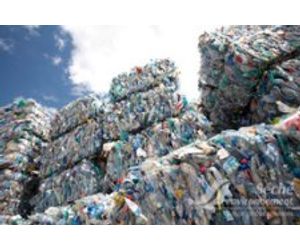
Product recovery is a way to conserve natural resources. Séché Environnement provides local solutions for managing household packaging waste and is developing specific expertise in recoverable waste generated by industries and businesses.Sorting centers (see also) for packaging picked up from selective household waste collection allows refining waste separation at the source by consumers (paper, cartons, bottles and small plastic bottles).
Mixed packaging is accepted at industrial facilities incorporating the most recent advances in sorting technology. Waste product separation is refined and controlled by certified personnel.
After sorting, recovered products are reconditioned. They become secondary raw materials and are shipped to the different recycling plants for recovery. These materials can be used as alternatives to virgin raw materials, accordingly conserving natural resources.
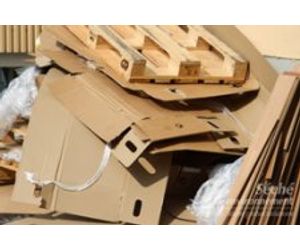
Sorting Centers for Ordinary Waste (see also) enable recovery of packaging and recyclable materials discarded by businesses and merchants (cartons, plastic, palettes, etc.).
Mixed OIW is sorted by trained personnel so that the recyclable fraction is recovered. Businesses can also perform sorting at the source. In this regard, Séché Environnement provides logistics solutions to support businesses in carrying out their waste management programs.
The materials are then reconditioned and shipped to recycling facilities where they are used as an alternative to virgin raw materials, accordingly contributing to the conservation of natural resources.
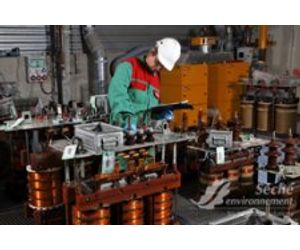
At its Trédi Izeaux and Trédi St Vulbas sites, Séché Environnement has developed specific know-how for handling electrical transformers:
- Disposal of PCB-contaminated electrical equipment
-
- Once the transformer is disassembled, decontaminated metal masses (copper windings, magnetic steel sheets and transformer reservoirs) are shipped to product recovery facilities and become secondary raw materials.
- Rehabilitation of electrical transformers
-
- Transformers containing low concentrations of PCBs may be rehabilitated. After draining and treating the PCB-contaminated oils, the equipment is decontaminated and rehabilitated. A test for impermeability and electrical code compliance is conducted before these transformers are returned to their owners for reuse.
Regulations require the disposal of used edible oils in special facilities. Through its Triadis Services subsidiary, Séché Environnement collects and pre-treats used frying oil discarded by households, institutional catering businesses and the food service industry.
The oil is then recovered in biofuel or oleochemistry facilities. Over the next few months, new recovery techniques will be offered to industrial clients for managing their waste.
Through its SPEICHIM PROCESSING subsidiary, Séché Environnement offers unique solutions for regenerating solvents in France. For more than 50 years, Speichim has been a key player in chemical distillation.
It is the preferred partner of chemical, paint and varnish, ink, automotive and surface treatment industries. Speichim recovers waste solvents, which, once the bleaching or distillation process is complete, present the same properties as new solvents.
The laboratory development of pilot facilities, a quality requirement (a Good Manufacturing Practices approach), a safety and environment policy and years of experience make SPEICHIM PROCESSING the leader in chemical recovery.
Séché Environnement`s R&D Laboratory has developed recovery solutions at its physical-chemical treatment centers (see also) :
- The sludge collected at the end of treating waste rich in zinc or nickel is pre-treated per concentration for subsequent recycling in the pyrometallurgical industry.
- The Chromapur process, currently only used in France for recycling sludge containing chromium, separates metals contaminated by chromic acid using ion exchange.
- Ion exchange resins are regenerated.