


- Home
- Companies
- Industrial Textiles & Plastics Ltd. ...
- Services
- Puraflex Chemical Resistance Testing
Puraflex Chemical Resistance Testing
Puraflex has been tested to the following EN Chemical Resistance Standards. Note that ASTM D5322 is a widely recognised test method for chemical resistance and it is incorporated within the EPA Method 9090 and ASTM D5747. Both EN 14414 and EN 14415 incorporate the ASTM D5322 test procedures.
Limitations of EN 14414 and EN 14415
The scope of industry standard test in EN 14414 and EN 14415 is limited to but a few hydrocarbons. Test data is limited to changes is weight and thickness and residual tensile strength and elongation. Whilst these immersion test methods provide a measure of of the membrane`s resiliance to durability, there is no permeation data for measuring the effectiveness of the membrane against specific challenge chemicals as identified in environmental risk assessments.
It is important to make the distinction between a membrane being resilient to a hydrocarbon and a membrane being effective as a barrier to permeation.
Current Industry test methods for chemical resistance are limited in terms of scope and value. Permeation rates for hydrocarbons and chemical contaminants are essential for determining the suitability of barrier membranes for site-specific installations.
Puraflex chemical resistance data and permeation rates for the following hydrocarbons and other environmental contaminants is available to Geotechnical Engineers and Environmental Consultants.
- BTEX - Benzene, Toluene, Ethylbenzene & Xylenes
- PAH - Polycyclic Aromatic Hydrocarbons
- TPH - Total Petroleum Hydrocarbons
- VOC - Volatile Organic Compound
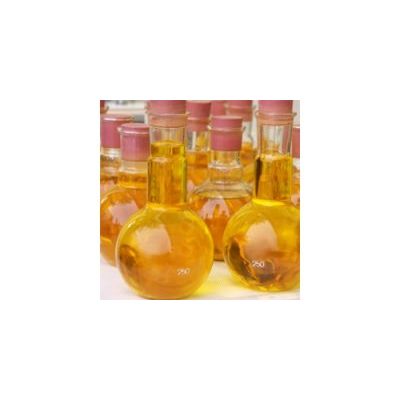
Immersion Testing, also known as Accelerated Life Testing (ALT), is used to stress a membrane at a higher level of chemical concentration and temperature than it would experience in normal use.
The ASTM D5322 immersion test method is the basis for EPA Method 9090, ASTM D5747,EN 14414 and EN 14415 chemical resistance tests . It is normally performed at a 100% concentration and typically the sample is immersed in the challenge chemical and maintained at a raised temperature for a specified period, 50 ºC for 56 days. As a rule of thumb, chemical reactivity doubles with a temperature increase of 10°C. Therefore testing at 50 ºC simulates an eight-fold increase in chemical reactivity, compared with tests at an ambient 20 ºC.
The test measures changes in weight, volume and tensile strength to provide a measure of the material’s durability. These measurements are then compared with a control sample and the extent of the variation is indicative of the extent of chemical attack. Residual tensile strength and elongation must be greater than 75%.
Puraflex test data for Hydrocarbons and other Toxic Industrial Chemicals is available to Geotechnical Engineers and Environmental Consultants to evaluate Puraflex`s suitability for a specific project.
Permeation is a natural phenomenon that occurs with all membranes. It is a process by which a chemical passes through the membrane by molecular diffusion. This occurs when the membrane absorbs the chemical until the membrane is saturated; the chemical then diffuses from the opposite side.
Typically a soil analysis will report on concentrations of over 60 hydrocarbons and toxic chemical contaminants. This data is used in Risk Assessments to ensure that unacceptable risk is removed and to make a site suitable for its intended use and to protect the wider environment, particularly surface water and groundwater.
Therefore to ensure accuracy and maintain the integrity of any risk assessment model, permeation data of the separating geosynthetic membrane is essential to the modelling predictions of the migration of contaminants from the Source, through the membrane and into the Pathway to the Receptor.
Puraflex Permeation Modeller is a powerful software program that calculates permeation rates for site-specific hydrocarbon contaminants. Reporting on over 200 hydrocarbons, it is provided free of charge to qualified environmental consultants and design engineers.