


- Home
- Companies
- Althena Medical
- Services
- Althena - Research, Development and ...
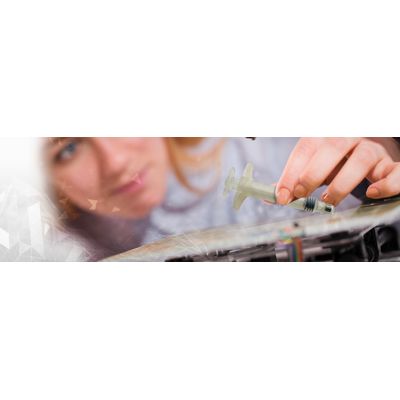
Althena - Research, Development and Prototyping Services
Thanks to the latest generation tools such as 4K technology, reverse engineering and specially trained personnel, the first prototypes of the device made through “injection moulding” are carefully and thoroughly measured to the hundredth. This is in order to verify the compliance of the injection moulding prototypes with the initial project. Furthermore, the material withdrawal is calculated, the presence of any defects and/or “burrs” and critical aspects such as the formation of internal air bubbles, potentially dangerous for the resistance of the component, are checked. The pilot moulds are optimised within one or two steps at most.
Once the withdrawals and manufacturing defects have been verified, we then move on to the creation of the final moulds. We work closely with the mould makers, transferring them the results of the measurements on the first prototypes and sharing their technical choices. Synergy and comparison are essential at this stage.
This results in:
- a high quality of each piece produced;
- fast production times;
- better quality/price ratio.
Supply chain
The entire supply chain is fully integrated with the company and it is local. There is a perfect combination and integration throughout mould making. In fact, those who make our moulds and those who directly print the pieces share our Values and our “Expertise”.
The supply chain is short and local so as not to be affected by international crises.
Engineering Department
Our modus operandi requires the “Research and Development” department to constantly collaborate with engineering.
All our products, both those commissioned by Customers and those developed with our Brand, are made with a view to production in a “clean room” and therefore accompanied by the creation of assembly tools and automatic systems. This way, the entire manufacturing process of our devices is monitored and supervised with a view to marketing carried out in the shortest time possible. From conception to production, the technicians of the engineering department design both the tools for device assembly and the machines, always in a 4.0 perspective, interfacing with suppliers for the creation of both pilot and final moulds. They also actively participate in the testing of the machines and equipment they have designed.
All maintenance, both predictive, routine and special, is the responsibility of the Engineering Department. It thus acquires increasingly more experience becoming more and more efficient. The Engineering Department also trains machine operators. Therefore, it is involved from the testing stage of the developed devices, up to the start and continuation of production, following the entire life cycle of the devices.
Patents
We know how important it is to patent and protect ideas that truly benefit both our devices and those of our customers. For this reason, the Research and Development Department has been trained from a patent point of view to search for patented solutions that may interfere with our own, and to find technical solutions easier to safeguard with a patent application. Therefore, the risk of interfering with third party patents or others copying our solutions is very low.
Furthermore, internal staff are supported by external professionals who have been following us for years and have in-depth knowledge of our sector, our products and those of our competitors.
Thanks to these synergies and our internal knowledge (Expertise), we are able to safeguard our ideas and those of our customers, significantly reducing the risks when launching the devices on the market.