

- Home
- Companies
- MedPro Disposal, LLC
- Services
- MedPro - Sharps Disposal Service
MedPro - Sharps Disposal Service
Sharps disposal can be a tricky business. One needle stick can take a life, or deliver thousands in fines from the EPA or other government bodies. To make things worse, regulations are always in flux, and they can change drastically across state or even local lines.
The tendency is to “err on the side of caution.” Unfortunately, that can also send costs exploding through the roof.
Where’s the “sweet spot” for sharps disposal? In the waste disposal world, knowledge truly is power. Below, find answers to all your questions, from “What are sharps?” to sharps disposal best practices and more.
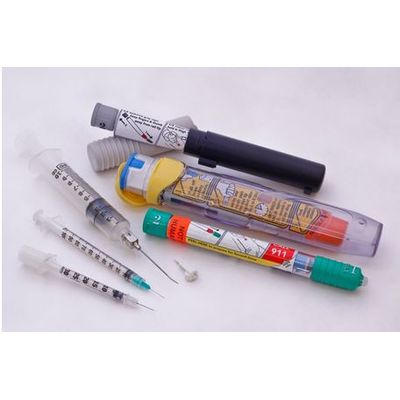
Image Via: Wikimedia Commons
Sharps can be defined as “any object that can cut or pierce the skin.” In the medical world, there’s an added element from potential contamination by bloodborne pathogens. Because this combination can spread disease, proper sharps disposal is a priority in any healthcare facility.
Here are some examples of sharps requiring special disposal in a sharps container:
- Needles. Hollow needles used for injecting medications.
- Syringes. The “plunger” body used to inject drugs. May have needle attached.
- Lancets. AKA “fingerstick” devices. These short, double-edged blades are used to get blood drops for testing. (Think, “diabetes blood test prick.”)
- Infusion Sets. Tubing/needle systems used to deliver medications beneath the skin.
- Epi Pens. Auto injectors pre-filled with epinephrine in case of anaphylactic shock.
- Insulin Pens. Auto-injectors pre-filled with insulin for diabetics.
- Connection Needles / Connection Sets. Needles that connect to tubes. Mainly used for home hemodialysis patients.
- Scalpels and other blades.
- Scissors used to cut flesh or dressings.
- Glass. Even unbroken glass that hasn’t necessarily been contaminated may still need sharps disposal.
- Sharp Plastic may need special disposal.
Sharps Disposal Methods
The FDA recommends putting all sharps in a special sharps disposal container. After that’s done, there are three main disposal methods.
- Mailback. This sharps disposal method literally sends the biohazardous waste through the mail. Since the sharps are properly packaged and labeled first, it’s safe and legal.
- Collection. One sharps disposal choice is packaging medical waste on-site. A disposal company then comes to collect it and take it off for treatment.
- On-Site Treatment. Some facilities elect for on-site sharps disposal. This is the most resource-intensive method since it requires specialized equipment.