


- Home
- Companies
- TÜV SÜD AG
- Services
- Shock and Vibration Services
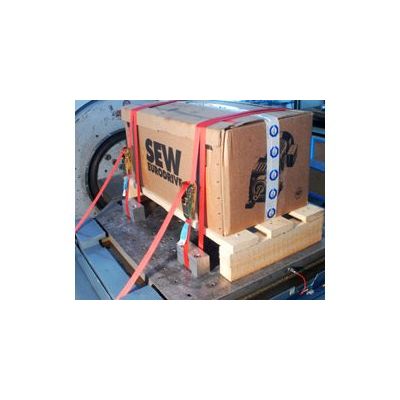
Shock and Vibration Services
Vibration Testing. What are Vibration Testing and Shock Testing? Vibration testing and shock testing are used to simulate in a controlled laboratory environment the extreme conditions that a product may face during use. They enable you and your customers to gain confidence in your product`s performance in the field by demonstrating that it is reliable and won`t let you down.
How can we help you?
However complex your product and whatever industry sector you operate in, you can have confidence that your vibration testing & shock testing needs come within the scope of our highly trained and experienced staff. Our Impressive vibration capability enables us to reproduce low and high frequency conditions, and to test products up to 5 tons in accordance with the requirements of MIL STD 810, DEF STAN 00-35, RTCA DO160, BS EN 60068, to name but a few. Any test not on our UKAS scope which is within our capability can be added quickly through our flexible schedule, which is a rare privilege granted to us by our accrediting authority.
Our vibration testing capability includes:-
- Sinusoidal
- Random
- Sine on random
- Swept sine on random
- Gunfire
- Shaker induced shock, including SRS
- Bump
- Hydraulic and electromagnetic shaker frequency range of 1Hz to 3kHz with up to 150kN of thrust
- Conditioning of test samples during vibration between +80ºC and -55ºC
Our shock testing laboratory has a unique set of facilities designed to test the robustness and fragility of packaged samples and their packaging. There are several shock machines, the largest having a table size of 2.1m x 1.2m. Additionally, there is a side impact machine, a compression machine, a precision drop tester and bounce facilities.
Our shock testing capability includes:-
- Free Fall
- Bump
- Drop Topple and stability
- Bounce
- Static load
- Compression
- Bending
- Racking
We can deliver UKAS accredited Vibration Testing and Shock Testing to the following standards:
- MIL STD 810, RCTA DO 160, DEF STAN 00-35, DEF STAN 07-55, DEF STAN 08-123, BS 3G100, BS EN 60068, EN 60945