

Site-Specific Water Quality Criteria
Nautilus has extensive experience in the development of site-specific water quality criteria (WQC) using a variety of EPA-approved methodologies. Three common approaches include: 1) Water-Effect Ratio (WER) studies to modify existing WQC limits based on bioavailability; 2) New WQC development using a multi-species/multi-taxa toxicity testing approach; and 3) WQC recalculation methods based on resident species.
A few recent project examples follow:
1 The WER approach was used to develop site-specific WQC for copper and zinc for the Port of Seattle SEA-TAC International Airport in 2004. Testing was performed on stormwater samples collected from seven locations using both Ceriodaphnia dubia and rainbow trout.
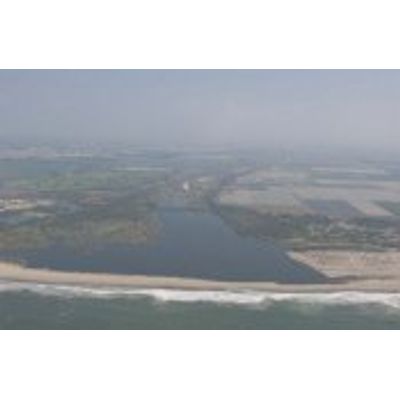
2 Both WER and resident species recalculation procedures were recently used to develop site-specific WQC for copper in the Santa Clara River Estuary in Ventura, California.
3 In support of a TMDL, the development of site-specific WQC is currently in progress for Shelter Island located in San Diego Bay, California. Sample collection and testing using the WER approach has been performed by Nautilus in San Diego.
4 Aquatic Life Values (ALVs) were derived for two organic chemicals in support of the development of Ambient Water Quality Criteria (AWQC) for the Mississippi River. ALVs were derived at Nautilus by conducting acute and/or chronic toxicity tests using a total of nine species (including new method development for resident species) over a period of seven months in 2003 and 2004. The ALVs were needed for these compounds to provide the basis for negotiating site-specific compliance values for a contaminated groundwater discharge entering the Mississippi River.
5 A WER study was conducted in May of 2002 to determine site-specific criteria for copper and silver discharged from the City of Chehalis wastewater treatment plant into the Chehalis River, Washington. Ceriodaphnia dubia was used as the primary species and rainbow trout was the secondary and confirmatory species.