- Home
- Companies
- Nautilus Environmental
- Services
- Toxicity Identification Evaluations
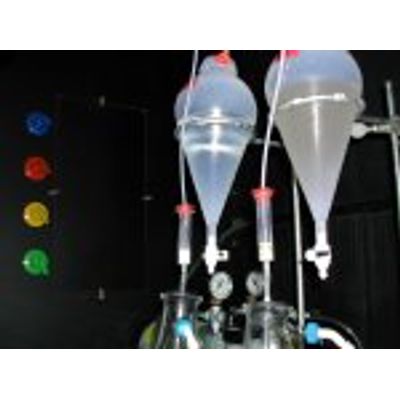
Model TIEs -Toxicity Identification Evaluations
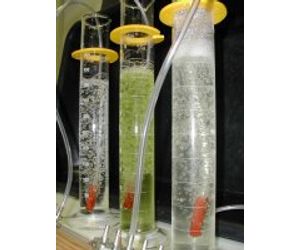
Toxicity Identification Evaluation (TIE) studies are now routinely performed procedures that have proven invaluable and applicable to a wide variety of environmental issues. A TIE combines toxicity testing with a suite of chemical and physical fractionation procedures and analytical chemistry to identify specific constituents responsible for toxicity. The result is a cost-effective method to directly address the cause of toxicity and concentrate accordingly on ways to reduce the problem. TIE procedures were originally developed to assist with NPDES compliance for wastewater discharges, but also have become integral parts for stormwater characterization and BMP evaluation, development of TMDLs for watersheds, and have proven extremely useful for a variety of risk assessment and remediation studies.
Nautilus offers perhaps the preeminent combination of experience available with regard to conducting TIEs. Few if any consulting firms or academic institutions can match our record of publications, technical contributions and experience in this field. This experience includes working with freshwater and marine organisms to identify the cause of toxicity in sediments and samples from point source and non-point source discharges. Discharges evaluated include municipal sewage treatment plants (STPs), industrial plants, mines, agriculture, geothermal plants, and pulp and paper manufacturing facilities. Causes of toxicity in samples of run-off from various industrial sites, shipyards, metal smelters, electrical substations, agricultural and urban areas, and roadways have also been identified. Identifying the cause of toxicity in an effluent, receiving water or sediment sample is critical to understanding the associated long-term implications of exposure, identifying potential source control or treatment options, and in some cases, establishing liability. Conversely, an improper identification can lead to implementation of ineffective yet expensive treatment options that do not address the fundamental cause of toxicity. In addition a poorly focused TIE can become expensive without yielding useful results. Consequently, it is important to utilize the services of a laboratory experienced in designing and conducting TIEs with a history of successfully identifying a wide variety of toxicants. This experience ensures that the procedures are properly implemented, and the results appropriately interpreted.
TIEs can also be applied to cost-effectively assist with the development of site-specific sediment quality criteria, evaluate the cause of impacts observed in or associated with the benthic environment, and aid with source identification and remediation studies. TIE procedures minimize the extremely difficult task of linking toxicity and chemistry to observed effects in this very complex matrix.
Species used for TIEs:
- Fathead minnow (Pimephales promelas)
- Rainbow trout (Oncorhynchus mykiss)
- Topsmelt (Atherinops affinis)
- Purple urchin (Strongylocentrotus purpuratus)
- Sand dollar (Dendraster excentricus)
- Marine amphipod (Eohaustorius estuarius)
- Mysid shrimp (Americamysis bahia)
- Water flea (Ceriodaphnia dubia)
- Mediterranean mussel (Mytilus galloprovincialis)
- Green alga (Selenastrum capricornutum)
- Giant kelp (Macrocystis pyrifera)