


- Home
- Companies
- TÜV SÜD America Inc.
- Services
- TÜV-SÜD - Arc Flash Analysis and Risk ...
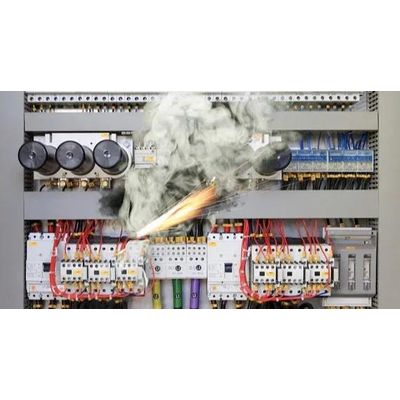
TÜV-SÜD - Arc Flash Analysis and Risk Assessments Services
An arc flash analysis or arc flash assessment evaluates the risk of an arc flash incident, which is an explosive release of energy caused by an electrical current flowing through the air between conductors. The assessment determines the incident energy to which a worker may be exposed and how to protect the worker from an arc flash accident and other electrical hazards. Based on this assessment, appropriate safety measures and personal protective equipment (PPE) are determined to mitigate risks and protect workers.
GOALS OF AN ARC FLASH ANALYSIS:
- Determine over-dutied electrical devices within a site.
- Identify miscoordination of overcurrent protection devices.
- Identify the proper personal protective equipment (PPE) required for employee safety.
- Ensure full compliance with arc flash codes and regulations, such as the National Fire Protection Association (NFPA) 70E.
- Ensure and maintain safe work conditions.
The most effective assessments provide a short circuit analysis, a protective device coordination study, and a one-line electrical diagram.
A short-circuit study determines the thermal energy and magnetic forces that are released into the electrical system which can cause insulation and conductor melting as well as explosions contributing to major equipment burn-downs. Magnetic forces can bend bus bars and cause violent conductor whipping and distortion. These conditions have grim consequences on electrical systems and equipment. Each equipment within the electrical distribution is evaluated to determine the short-circuit withstanding rating.
A protective coordination study, sometimes called a selectivity study, is performed to improve the reliability of the electrical distribution system. A poorly coordinated system can cause power outages that can escalate into major blackouts. That results in dangers to onsite personnel and loss of production.
Arc flash analysis by TÜV SÜD
Reduce your risk of electric fires with safety audits from TÜV SÜD Global Risk Consultants (GRC). Our engineers perform short-circuit, protective device coordination and arc flash risk analysis to identify electrical hazards. We are licensed throughout the United States and will identify code or electrical safety violations during the survey. We also help you develop training programs to prepare your employees to operate safely and prevent accidents.
TÜV SÜD`s Approach to Electrical Safety and Arc Flash Assessments
- Prior to starting a project, we educate our clients on the project stages and update the client contact once each phase is complete.
- Arc flash risk assessments are uniform across all client locations and facilities.
- Per NFPA 70E, an arc flash risk assessment is required to be re-done every 5 years. We take a proactive approach, where we contact the facility within 3 years to discuss any update.
- One-line diagrams, Short-Circuit and Coordination studies are always performed.
- All observations of code issues are listed and made available to the client and immediate electrical hazards are included in our survey.
- Arc flash labels are explained and installed at your locations by our staff.
- We are always on hand to answer your questions and concerns.
- We also offer comprehensive electrical safety and arc flash training programs.
White Paper: Guide to Arc Flash Assessments, Boundaries & Labels
arc flash compliance
Arc Flash Assessments are Required in the Following Scenarios:
- Your equipment is greater than 50 volts.
- Your state adopted the 2017 edition of NFPA 70.
- You haven’t had an assessment in five years.
- You made significant upgrades or modifications within five years.
- You can’t de-energize equipment remotely.
An arc flash risk assessment is required by government regulations like OSHA, NFPA 70E and NFPA 70. Those regulations can be difficult to follow, so here is a handy breakdown:
NFPA 70E provides guidance on safety requirements for workers engaging in the installation, inspection, operation, maintenance, and demolition of electric conductors and other equipment. It requires an arc flash analysis to determine the proper boundary and safe work processes. It also requires that each panel be marked with an Arc Flash Hazard Warning Label.
NFPA 70 has been adopted in all 50 U.S. states as the benchmark for safe electrical design, installation, and inspection. It addresses PPE, labeling, and electrical handling procedures.
The Institute of Electrical and Electronics Engineers (IEEE) 1584 provides formulas and methods for determining arc flash boundaries and incident energy.
OSHA 29 CFR Part 1910 requires that an employer conduct an assessment to determine if hazards are present which necessitate personal protective equipment (PPE). It also requires that employees wear appropriate PPE for protection and use insulated tools or handling equipment.
Phases for completing an arc flash analysis:
1. Phase 1 – Field Survey
- Gather data on the facility’s electrical distribution system.
2. Phase 2 – Electrical One-line
- Create electrical one-line diagrams in AutoCAD using the information gathered during a site visit.
3. Phase 3 – Data Entry/Analysis
- Build a model of the electrical distribution in an electrical analysis program using the electrical one-line created in AutoCAD.
- Perform short-circuit analysis on the electrical equipment.
- Perform protective device coordination analysis on circuit breaker, fuses and relays.
4. Phase 4 – Draft/Final Reports
- Issue a draft report to the client for review and comments.
- Identify in a tabular format electrical equipment that failed the short-circuit analysis.
- Issue a final report.
5. Phase 5 – Arc Flash Label Installation/Requirements
- Print arc flash labels on self-adhesive sticky back label paper and project closeout.