


- Home
- Companies
- Twence B.V.
- Services
- Waste Sorting Services
Waste Sorting Services
When drivers arrive at the Twence Afvalscheiding (TAS) facilities with a load of waste to be sorted, they dump it onto a flat expanse of concrete. There, a TAS employee checks the waste material to see whether or not it can be processed.
Using a mobile crane, TAS employees remove the (very) bulky components from the pile of rubbish, along with any materials that can immediately be reused. The reusable materials and the (very) bulky items are placed in containers and transported to storage facilities or to a final destination. A shovel or crane loads the remaining waste material onto a bunker belt that carries it to the drum screener.
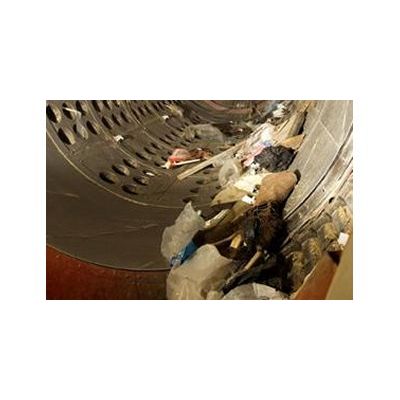
Waste-sorting drum
The drum screener is one of the most important parts of the waste-sorting plant. This rotating drum has a screen that keeps oversized wooden or metal items from getting stuck in the plant. Only the smaller, processable parts—up to half a metre in length—can pass through it. The closed wall in the rear blocks the longer pieces and flings them back into the drum. This not only ensures a better transit of materials along the conveyor belts but also reduces the number of disruptions to the sorting process. Having passed through the drum screener, the waste material then enters the automatic sorting line.
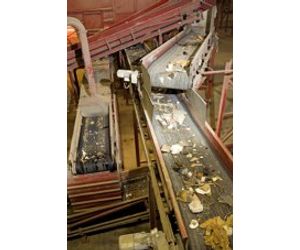
In the automatic sorting line, magnets remove any iron and tinplated objects, while windshifters (special fans) blow light-weight materials such as plastics out of the stream of waste.
Sorting cabin
Whatever waste has not been removed by all the vanes, magnets and windshifters of the automated sorting line ends up in the sorting cabin. There, the remaining materials are further sorted by hand. These can include wood, metals, debris, plaster, paper/cardboard, films and hard plastics. There are separate waste-holding bays for each type of material.