


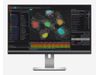
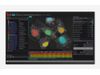

Tomocube - Version TomoAnaly sis -Artificial Intelligence (AI) Tools
TomoAnalysis 2.0 integrates powerful, open-source artificial intelligence (AI) tools like ilastik, StarDist, and Cellpose, providing a flexible yet rigorous solution for analyzing complex biological images. With fully customizable workflows and efficient batch processing for large datasets, this platform is engineered to meet diverse research needs with scientific accuracy and reliability.
TomoAnalysis 2.0 integrates powerful, open-source artificial intelligence (AI) tools like ilastik, StarDist, and Cellpose, providing a flexible yet rigorous solution for analyzing complex biological images. With fully customizable workflows and efficient batch processing for large datasets, this platform is engineered to meet diverse research needs with scientific accuracy and reliability.
Specially tailored to maximize the capabilities of Tomocube's HT-X1 series, TomoAnalysis 2.0 enables researchers to achieve high-sensitivity, label-free 3D visualization and quantification. It facilitates the precise measurement of morphological and biophysical parameters—volume, surface area, dry mass, and concentration—across various cellular structures such as lipid droplets, mitochondria, organoids, and bacteria, supporting in-depth cellular analysis with clarity and consistency.
Designed for a wide array of applications, TomoAnalysis 2.0 is optimized for both holotomography and correlative fluorescence signals, supporting cell classification and advanced segmentation. This integrated approach empowers researchers to analyze subcellular structural changes, monitor cellular state changes over time, and investigate cluster characteristics under drug treatments, advancing discoveries in cell research through rigorous and adaptable analysis.
AI-driven structure segmentation
Segmenting cell and subcellular structures with customized AI models.
Refractive index-based thresholding
Using logical, rule-based image analysis that leverages optical properties.
Manual mask correction
Fine tuning masks generated by analysis pipelines with Mask Editor’s drawing and label editing tools.
Morphological and quantitative analysis
Gaining insightful biophysical metrics of segmented objects through AI-powered and RI-based analyses.
3D visualization
Gaining comprehensive structural interpretation of the interested objects through the immersive 3D visualization feature.
Fluorescence-integrated analysis
Studying cellular structures, functions, and processes with high specificity based on fluorescence signal intensity quantification.