


- Home
- Companies
- Codar Ocean Sensors
- Software
- SeaSonde Portus - Marine Information ...
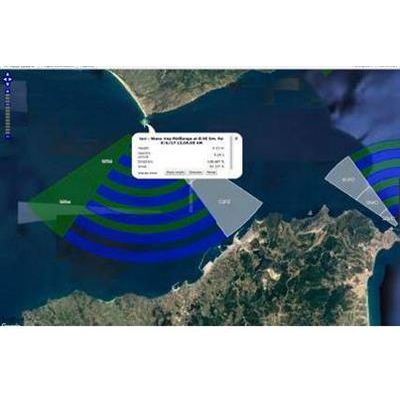
SeaSonde Portus - Marine Information System Software
PORTUS is a state-of-the-art, multi-user, web-based Marine Information System that boosts visibility and value of your oceanographic and meteorological data. PORTUS provides real-time and historical environmental data management, analysis, visualization and internet-based distribution. A wide variety of environmental data whether measured or modeled are made accessible through a familiar Google MapsTM interface. Ability to integrate data from different models of HF radar systems. Special attention is paid to get the most out of CODAR SeaSonde® HF radar data.
Highlights
- All your met data into one system
- Access your data anytime, anywhere
- Access rights management
- Powerful export and data sharing tools
- Multilingual/ customizable web portal
- Automatic data validation tools
- Added-value HF radar products
PORTUS users include:
- Meteorological Institutes
- Universities
- Port Authorities
- Research Institutes
- Environmental Authorities
- Navies
- Industry
User-friendly, multi-user, web-based interface to easily display and manage historic and real-time HF radar currents, wind and wave data; Vessel tracks from AIS and SeaSonde HFR Vessel Detection software.
Open architecture to integrate comprehensive National Observing Systems including ADCPs, buoys, tide gauges, met stations, satellites, forecast models... and customized derived products.
Flexible data sharing and export capabilities (FTP server, OPEnDAP, KML, Web Map Services...).
Scalable client-server architecture.
Environmental
SeaSonde bistatic transmitter electronics ( Transmitter chassis, Iridium device) are intended for indoor or properly climate controlled environment only:
- Temperature Range: 0° F (-18° C) to 110°F (45° C)
- Maximum Humidity: 80% non-condensing
Input Power
- SeaSonde Bistatic Transmitter Package Total Power Consumption (including transmitter, and Iridium device)
- 105 watts, (4A@26V)
- AC Power Conditioning via Uninterruptable Power Supply (UPS) recommended.
System Requirements – SeaSonde Antennas & Cabling
Clear Space Around Bistatic TX Antenna
Objects that interact with or alter the response of the transmit or receive antennas can affect bearing accuracy or create bearing gaps in coverage
- Position SeaSonde transmit antenna one horizontal RADAR wavelength or greater away from tall (one quarter of the RADAR wavelength or taller) objects or obstructions (see chart below). Tree trimming/removal, or relocation of other man made objects may be necessary.
- There should be no obstructions between the receive antenna and the seaward side that may block energy in direction of ocean
Distance (Horizontal) from Water to Antennas
Antennas should be positioned close to the water to prevent propagation loss of energy traveling over ground. Maximum recommended distance from transmit antenna to water is four RADAR wavelengths (see adjacent chart).

Bases/Mountings for Antennas:
For staying upright, Antennas need to be mounted to concrete concrete pad (~ 1m x 1m 1m) or lashed/guyed to fencing or other solid structure. Read SeaSonde Antenna Installation User`s Guide for examples.
Cabling Protection
There is 1 RG-8 cable connecting the TX antenna to the electronics. Ideally cables between antenna and electronics are fed through protective conduit (such as 3.5 cm diameter PVC pipe) and buried in trench.
Communications via Iridium satellite modem. Iridium Satellite Modem #9601-D-I, designed to operate with the Iridium network under SBD mode.
Iridium Modem Specifications:
Dimensions: 4.16” L x 2.21” W x 0.51” D (106 mm x 56 mm x 13 mm)
Weight ~0.26 pounds (120 g)
I/O Interface: 26-Pin Samtec EHT Series
Antenna connection: SMA Female
Cooling: Convection ;
Enclosure: Aluminum/EMI shielding
Antenna height: 78cm ;
Antenna cable: 25’ length
Electrical
Input Voltage Range: 4.5VDC to 5.5VDC
Input Nominal Voltage: 5.0VDC
Input Ripple Voltage: 40mV peak-to-peak
Avg. Standby Current: 66mA @ 5.0VDC
Avg. Transmit Current: 350mA @ 5.0VDC
Peak Power-up Current: ~1.5A @ 5.0VDC
Iridium RF Board
Operating Frequency: 1616 to 1626.5 MHz
Duplexing Method: Time Division Duplex
Multiplexing Method: TDMA/FDMA
Link Margin Downlink: 13 dB average
Link Margin Uplink: 7 dB average
Data I/O
SBD Mobile Originated: 340 Bytes/message
SBD Mobile Terminated: 270 Bytes/message
Hardware Interface: RS232
Software Interface: AT Commands
Environmental
Operating Temperature: –22oF to +140oF (–30oC to +60oC)
Operating Humidity: < 75% RH
Storage Temperature: –40oF to +185oF (–40oC to +85oC)
Storage Humidity: < 93% RH
† Specifications and appearance are given as guidelines and may change without notice.