


- Home
- Companies
- Quality Institute of America - QIA
- Software
- QISS - Quality Management System (QMS) ...
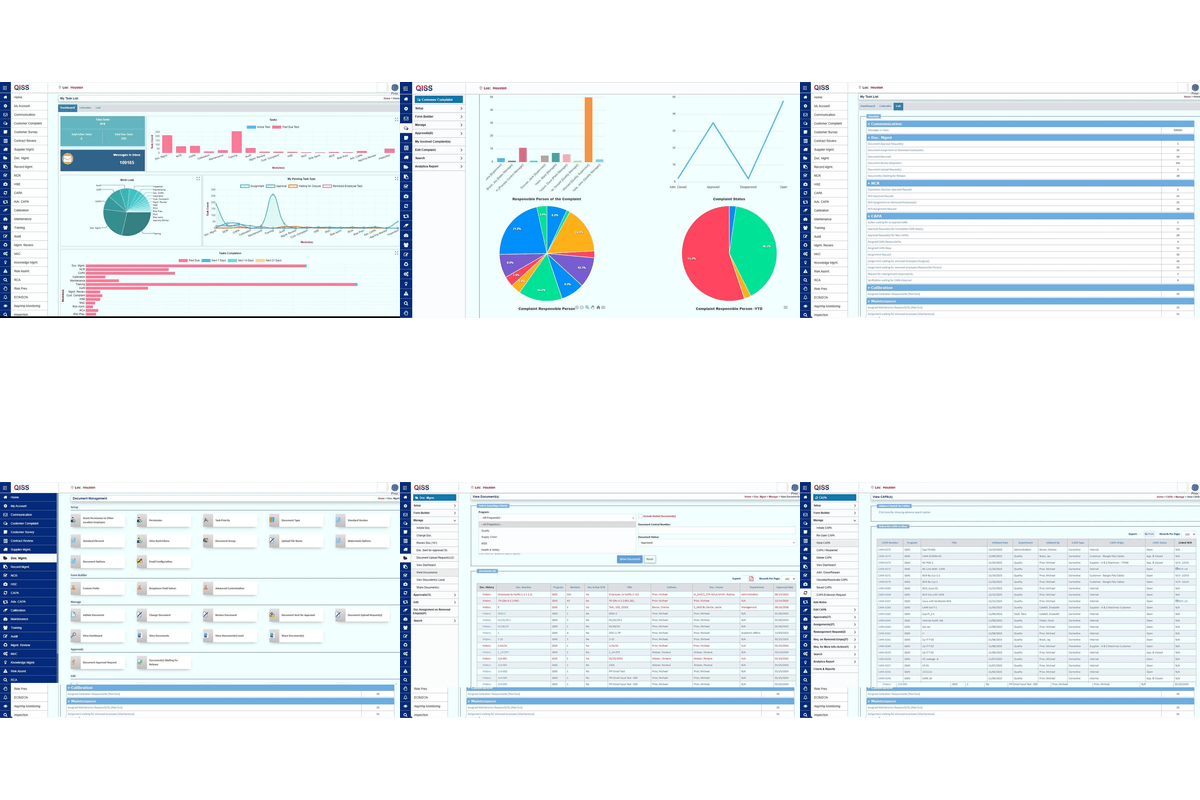
QISS - Quality Management System (QMS) Software
QISS Quality Management System (QMS) is an integrated software solution for automating and enhancing traditional quality management processes. Designed by the Quality Institute of America, QISS offers a comprehensive suite of modules catering to ISO 9001 and other quality standards. Its architecture simplifies document control, change management, non-conformance management, and CAPA (Corrective and Preventive Action) processes. By converting manual documentation into electronic formats, QISS facilitates adherence to quality policies and work instructions, thus reducing errors and increasing operational efficiency. The system emphasizes customer satisfaction, continuous improvement, and stringent quality assurance measures. It aids organizations in risk management, regulatory compliance, and systematic quality control. QISS is scalable for businesses of any size aiming for streamlined operations, competitive edge, and improved decision-making through data-driven analysis. Implementing QISS can significantly enhance process optimization, employee engagement, and supply chain reliability.
Our QISS QMS system is designed to simplify your organization's quality policy. It helps you process clear work instructions for your organization, reducing rework and defects. Implementing QMS allows you to control your process more effectively and efficiently.
What is Quality Management System (QMS)?
Quality management system is the process and procedure of an organization to deliver quality products and services. The main purpose of a QMS is to improve the overall efficiency of a business, reduce waste and errors, and increase customer satisfaction. It involves establishing a clear set of standards and procedures for all aspects of the company, from product design to delivery. A quality management system is built on several key principles. Customer focus, employee involvement and continuous improvement are the main elements of a well implemented QMS.
What does QMS Stand for?
QMS is the abbreviation for Quality Management System. There are several different QMS standards, including ISO/TS 16949, ISO 9001, ISO 14000, ISO 13485, and ISO 19011. Each of these standards provides a different framework, but they all share the same goal of improving the quality of products and services. It can help your company to improve your overall performance and stay competitive in today's market. Our QISS QMS solution helps you to increase customer satisfaction, reduce waste and errors, and improve your bottom line.
What is ISO 9001 Quality Management System?
The most popular quality management standard worldwide is ISO 9001. It has been issued to organizations in 189 countries and has over a million certificates. The only standard that can be certified within the ISO 9000 family is ISO 9001. It defines seven quality management principles, such as a strong customer focus and continual improvement.
Businesses Benefit from ISO 9001 in several ways:
- Client Satisfaction: The standard guarantees that businesses have strong quality assurance procedures in place, this increases client confidence.
- Efficient Handling of Customer Complaints: ISO 9001 provides guidelines for handling customer complaints effectively; this helps to solve problems in a timely and satisfactory manner.
- Process Improvement: By identifying and removing inefficiencies, the standard lowers costs and produces better results.
- Continuous Optimization: Consistent audits and evaluations, promoted by ISO 9001, help companies improve their quality management systems over time. This helps them maintain their competitive edge and success in the long run.
Why Implement a QMS?
Quality assurance and quality control are the two main components of a QMS system. To run an organization in a systematic way, you need to implement a QMS system. By implementing a QMS, an organization can fulfill customer requirements and legal compliance. Well-implemented quality assurance and quality control help you increase your business capability.
You need to follow five standards to implement a QMS system.
- ISO 9001 For Implementing QMS in all types of Industry
- ISO 14001 For Implementing EMS (Environmental Management System) in all type of Industry.
- ISO 45001 For Implementing OHSAS (Occupational Health and Safety Assessment Series) in all types of Industries.
- IATF 16949 (International Automotive Task Force) For implementing QMS in Automotive Industries.
- ISO 27001 Information Security Management System
Quality Management Process
The quality management process is a series of procedures. It's used to verify that a team's deliverables are fit for purpose. This procedure is important in every business. It ensures that the deliverables provided truly fulfill the consumer's needs. The quality management process will assist you in immediately improving the quality of your deliveries.
The QMS process consists of three phases: planning, assurance, and control. It ensures that deliverables meet consumer needs and improve quality.
The QMS process consists of three phases: planning, assurance, and control. It ensures that deliverables meet consumer needs and improve quality.
Quality Management Planing: Quality planning is the first phase. Planning of the quality process is explained
- Enterprise Environmental Factors
- Organizational Process assets
- Project Scope Statement
- Project Management plan
We have organizational process assets and work performance initiation followed by quality metrics and quality checklists.
Quality Assurance:
- Quality Management plan
- Quality Metrics
- Quality Process Improvements
- Performance Information
- Approved Change Requests
- Quality Controlled Measurement
Quality Control:
- Quality Management plan
- Quality Metrics
- Organizational Process assets
- Work Performance Informantion
- Approved Change Requests
Why is Quality Management Required?
Enterprises around the world are prioritizing themselves to provide quality goods. Today’s customers have a huge number of options in front of them only if the organization has quality goods. Enhancing quality through continuous improvements is such a vital role for many organizations. Nowadays, it is essential for an organization to have quality management to grab the customer's attention.
Why Quality Management System (QMS) is important to an organization?
Now, let us point to the checklist of why quality management is important.
- Creates Customer Satisfaction
Customer satisfaction is crucial for businesses to achieve loyalty and returning repeat customers, positive reviews, and a positive brand image. - Product consistency in terms of quality and design
Firms must plan, create, execute, and manufacture to ensure product consistency and accuracy. - Ensures long-lasting efficiency
Enhancing your QMS to achieve even greater efficiency and excellence. Quality Management is crucial for enhancing efficiency and product quality in any organization. It ensures that all employees, from engineers to sales managers, are aware of the best practices in their respective fields. - Reduces risks.
By lowering the risk, customers can be confident in receiving expected products or services. - Increases profits.
Enhancing product quality, reducing costs, and establishing a reputation significantly increase your revenue. - Maintains the competitive advantage.
Maintaining a high level of customer experience will sustain our competitive advantage.
Optimize your quality control and compliance with our QMS system. QISS QMS, is a comprehensive quality management software to achieve your goal. And discover the advantages of streamlined operations and improved regulatory conformance.