

Research into the atmospheric dispersion of industrial emissions (impact studies, hazard studies)
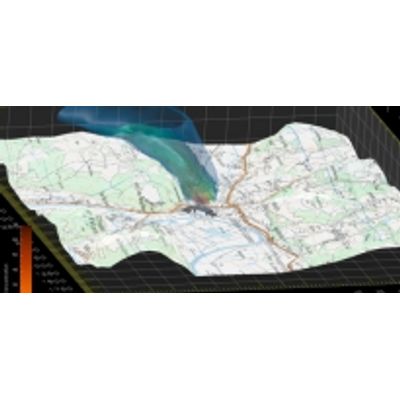
NUMTECH employs the very latest Gaussian dispersion models, such as ADMS or AERMOD/ISC, to produce studies for a wide range of industrial sites, while factoring in particularly complex effects such as hilly terrain, mixed land use patterns, obstacles, local weather conditions, etc. For sites with a particularly complex configuration, our engineers bring even more sensitive 3-D tools into play, selected according to the scales involved: CFD FLUENT model (Eulerian approach) for dispersion studies involving near fields and complex environments, mid-scale models (RAMS, MM5, WRF), coupled with a Lagrangian model when the study requires an impact assessment over greater distances. Integral models (GASTAR) are used to factor in the dispersion of denser-than-air gases for some hazard studies.
The experience gained in working on hundreds of dispersion studies, combined with recent research conducted jointly with our partners (CEA, Ecole Centrale de Lyon), means we are well equipped to provide critical analysis on computed results and their implementation, and also to assess the uncertainty level corresponding to the results supplied.
International databases (meteorological data, topography, land use, etc.) make it possible to conduct research at sites on a worldwide scale.
NUMTECH provides end-to-end management of Health Risk Assessment studies relating to impact studies, based on modelling studies in complex environments (air, ground, water), and the use of these results by sanitary engineering specialists, in partnership with the Centre d’Etude de l’Impact de l’Environnement sur la Santé (C.E.I.E.S - Centre for Research into Environmental Impacts on Health).