


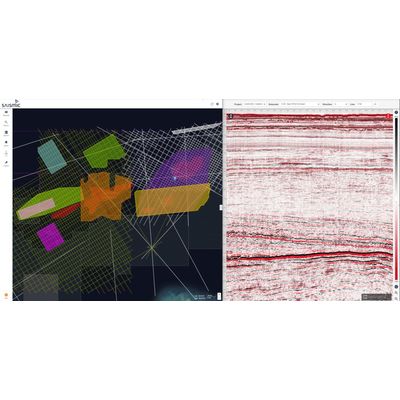
Version sAIsmic -Global Rectified Seismic Data On-Demand
sAIsmic’s global coverage offers datasets for regional screening activities, any area of interest and right down to block sized coverage, ready in an instant.
sAIsmic’s coverage includes Searcher’s rectified data on-demand:
Offshore:
- Australia
- Argentina
- Oman
- Peru
- South Africa
- Timor-Leste
Onshore:
- Australia
- Argentina
- Gabon
- Peru
Searcher’s Multi-Client data library can also be delivered and downloaded via the sAIsmic platform:
- Argentina
- Australia
- Ireland
- Mexico
- Norway
- Papua New Guinea
- Peru
- Philippines
- Timor-Leste
As machine learning becomes common place in the oil and gas industry the need for organized data with known provenance and usage rights has never been greater. The majority of currently available seismic data is fraught with challenges; from legacy file formats, inconsistent metadata to dynamic range problems. sAIsmic solves all these problems by collecting, standardizing and storing the worlds seismic data on a modern big data infrastructure.
sAIsmic offers industry an innovative and smarter way to interact with seismic data on the premise that it should be adaptive, flexible and compatible with today’s big-data tools.
The global library of data has been deconstructed from the rigid flat file format traditionally associated with seismic and transformed into a distributed, scalable, big data store.
This allows for rapid access, complex queries and efficient use of compute – fundamental criteria for enabling Big Data technologies such as deep learning.