
Show results for
Refine by
Soil Groundwater Equipment & Supplies
10 equipment items found
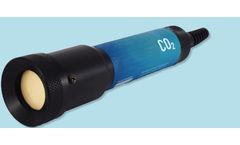
Manufactured by:Solinst Eureka LLC based inAustin, TEXAS (USA)
Carbon dioxide can enter the water through multiple pathways. Some primary land sources can include decay of organic matter, dissolution of carbonate rocks, wastewater discharge, and watershed draining. Other natural sources include biological respiration, sediment diagenesis, or volcanic activity. A major source/sink of CO2 is atmospheric exchange at the air/water interface. Simply, carbon ...
Manufactured by:Solinst Eureka LLC based inAustin, TEXAS (USA)
Fluorescent dyes like Rhodamine are often added to water systems to provide water discharge and velocity data. Dye tracing studies can provide useful information for modeling surface and groundwater systems in addition to tracing contaminants. Fluorometers allow researchers to measure ultra-low concentrations of dye. The sensors extreme sensitivity and instrument flexibility allows researchers ...
Manufactured by:Solinst Eureka LLC based inAustin, TEXAS (USA)
Fluorescent dyes like Fluorescein, are often added to water systems to provide water discharge and velocity data. Dye tracing studies can provide useful information for modeling surface and groundwater systems in addition to tracing contaminants. Fluorometers allow researchers to measure ultra-low concentrations of dye. With extreme sensitivity and instrument flexibility, researchers can glean ...
Manufactured by:Solinst Eureka LLC based inAustin, TEXAS (USA)
Oxidation reduction potential, or ORP, is a measure of how chemically oxidizing or reducing a body of water is. In general, the ORP of a solution determines what chemical reactions will tend to occur, indirectly affecting the types of flora and fauna that will thrive in the water. In well-oxygenated natural waters at equilibrium, dissolved oxygen (DO) dominates the ORP of the solution, ...
Manufactured by:Solinst Eureka LLC based inAustin, TEXAS (USA)
Blue-green algae is not algae, it is bacteria called cyanobacteria (phycobiliproteins). It is called algae because it is, like algae, photosynthetic. In fact, blue-green algae is responsible for over 20% of the earth’s total photosynthesis. And, like algae, cyanobacteria can be found as individual cells in filamentous colonies. Cyanobacteria have been found to be a numerically abundant ...
Manufactured by:Solinst Eureka LLC based inAustin, TEXAS (USA)
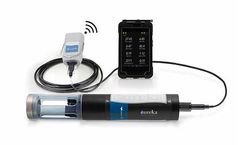
Eureka’s mantaMobile wireless Bluetooth device provides an easy, cost effective, and versatile way to capture water quality data from Eureka’s multiparameter probes, using Bluetooth-enabled display ...
Manufactured by:Solinst Eureka LLC based inAustin, TEXAS (USA)
Fluorescent dyes, particularly those which are non-toxic and not visible, like PTSA, are often added to water systems to provide water discharge and velocity data. Dye tracing studies can provide useful information for modeling surface and groundwater systems in addition to tracing contaminants. Fluorometers allow researchers to measure ultra-low concentrations of dye. With this extreme ...
Manufactured by:Solinst Eureka LLC based inAustin, TEXAS (USA)
“Crude oil” is a catch-all term for unprocessed, natural petroleum. There are many classes of crude oil, and the chemical composition of each source is slightly different. Not all crude oil in water is the result of a man-made oil spill; many water bodies have small amounts of oil seepage. One source estimates that each year, 500,000 barrels of oil seep into the Gulf of Mexico from ...
Manufactured by:Solinst Eureka LLC based inAustin, TEXAS (USA)
Conductivity is the ability of water to conduct electricity. This conduction requires ions in the water to be charge carriers. Pure water contains no ions (aside from the occasional rogue water molecule), and so is a very poor conductor of electricity. But as water picks up chemical salts, those salts add ions to the water when they dissolve. So as the ionic strength of the water rises, so ...
Manufactured by:Solinst Eureka LLC based inAustin, TEXAS (USA)
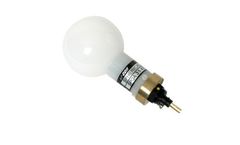
Measuring photosynthetically active radiation (PAR) under the surface of water is useful in a variety of fields, from algal biofuels research to environmental quality. When light passes through a water column, it is attenuated based on the thickness of the column and the turbidity of the water. Measuring PAR underneath the surface of a lake, stream, bay, ocean, pond, or bioreactor can provide an ...