


Air Quality Measurement Solutions for Government Sector - Government
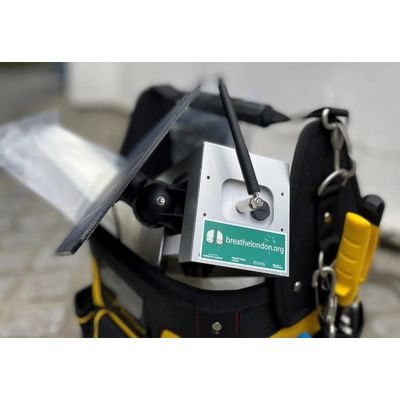
Cities such as London, Paris, and Perth have worked with Clarity to implement hybrid, low-cost ambient air quality monitoring networks to supplement existing regulatory air pollution measurement networks.
- Air sensors are increasingly recognized as a valuable tool for indicative and non-regulatory supplemental and informational monitoring (NSIM).
- Clarity’s Sensing-as-a-Service solutions are designed to complement existing government infrastructure.
- We work with you to design a robust air quality monitoring network that is validated for data accuracy and precision.
There is an increasing demand for high-resolution, accurate air pollution data.
Communities around the world are creating increased public accountability for air quality managers.
Federal reference monitors (FRM) are designed to monitor air quality trends year-over-year — but can’t identify day-to-day, localized pollution events.
Many air quality regulations are decades old and do not adequately address modern-day air pollution challenges.
To support a broader understanding and more effective use of this technology, the US EPA recently released performance standards for air sensors that will help to better characterize the performance of commercially available air sensors in a clear and standardized way.
Read our whitepaperA robust air sensor network can help raise awareness of air quality, protect citizens from air pollution exposure, and mitigate air pollution concerns in your community.
Affordably increase air quality measurement pointsDeploy dozens of low-cost air quality sensors for the equivalent cost of one Federal Reference Monitor.
Collect high resolution, accurate air quality measurements at unmonitored sites.
Share real-time air quality information with your stakeholders to understand short-term changes in air pollution.
Accurate and localized air pollution data will enable you to make strategic data-driven decisions to protect public health.