


- Home
- Companies
- Explorer Company
- Applications
- Fiberglass Cap Filter for ...
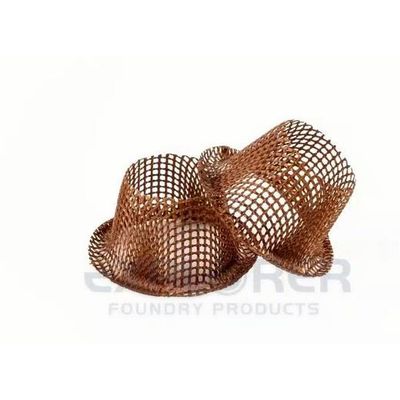
Fiberglass Cap Filter for Revolutionizing Aluminum Wheel Hub Casting - Metal - Aluminium
Aluminum alloy wheel hubs are fundamental components in modern vehicles, and their quality hinges significantly on the purity of the molten aluminum. The traditional low-pressure casting method for producing these wheel rims has long relied on filtration to remove impurities. However, conventional filtration techniques present significant challenges, leading to increased costs and compromised product integrity.
The Limitations of Traditional Filtration VS Fiberglass Cap Filter
Historically, the aluminum wheel hub casting industry has primarily used two types of filters:
The Iron Wire Mesh Dilemma VS Fiberglass Cap Filter:
The common practice involves inserting an iron mesh filter into the sprue before each casting. While simple and low-cost, this method comes with critical drawbacks:
- Contamination & Cost: Iron mesh inevitably remains in the riser of the cast part. Post-drilling, the iron-laden aluminum chips require specialized de-ironing treatment before recycling, significantly increasing recycling costs and inventory turnover.
- Material Brittleness: The presence of iron mesh can increase the overall iron content within the aluminum alloy wheel hub rough material, leading to undesirable brittleness.
- Casting Instability: Iron mesh can accelerate the cooling rate of the riser, negatively impacting mold casting stability and increasing the product’s defect rate.
- Usability Issues: The common “soup bowl” shape of iron mesh is inconvenient for handling and prone to misplacement during installation.
The Fatal Flaws of Ceramic Filters VS Fiberglass Cap Filter:
While ceramic filter plates are a standard in some applications, they possess critical limitations for precise molten aluminum filter needs:
- Inconsistent Filtration: Controlling the exact pore diameter of ceramic filter plates during production is challenging, leading to significant variations in pore size between batches. This directly affects the molten aluminum flow rate and filtration consistency.
- Fragility Risk: Ceramic filter plates are inherently brittle and prone to breakage, especially when impacted by the molten melt diverter cone. Fragments can directly enter the liquid metal, leading to scrapped aluminum wheel hubs.
Explorer Company’s Breakthrough: The Fiberglass Cap Filter Advantage
Explorer Company, a leading fiberglass mesh manufacturer and fiberglass filter manufacturer, offers a superior, cost-effective, and high-quality solution for aluminum wheel hub casting melt filtration: our advanced Fiberglass cap filter and Fiberglass mesh filter sheets.
Our glass fiber filter products overcome the limitations of existing methods by leveraging the inherent advantages of fiberglass itself:
- Purity Maintained: Our fiberglass cap filter ensures that the iron content in the final aluminum wheel hub remains at the original aluminum’s level, as the fiberglass itself has uniform and minimal iron content.
- Effortless Recycling: A major advantage of our molten metal filter is that aluminum residue left on the fiberglass mesh filter after filtration can be directly remelted. There’s no need for special de-ironing treatment of aluminum chips after drilling, drastically reducing recycling costs and lowering overall production expenses.
- Enhanced Casting Process: (1) By replacing the “soup bowl” iron mesh with our hollow conical fiberglass mesh filter, the filtration effect is comparable, but crucially, it increases the riser volume. This significantly aids in aluminum melt shrinkage compensation, improving overall castability. (2) The fiberglass cap filter does not melt in the aluminum liquid. Any residual mesh fragments in the aluminum chips can be easily removed by raking after remelting and degassing/deslagging, as they float with the aluminum dross.
- Improved Product Quality: Our solution directly contributes to reducing the iron content in aluminum alloy wheel hubs, which in turn helps to lower the product defect rate, making it a highly promising technology for widespread implementation
- Efficiency Boost: With our method, aluminum can be directly punched out from the sprue using stamping tools, significantly saving aluminum alloy costs and enhancing production efficiency.
Our Fiberglass Cap Filter Innovative Design & Application:
Our fiberglass cap filter can be provided in various shapes, including base, conical, or truncated conical forms, or customized to match the specific geometry of pouring gates and flow diverters. It is typically formed by winding fiberglass mesh sheets, with ends often punched with “T” or “7” shaped tenons/patterns for secure placement. During the low-pressure casting process, our high temperature filters are placed at the ingate of the bottom mold, held by the top mold upon closing, and remain within the riser after casting. Our fiberglass mesh filter typically has a mesh size of 15-18 mesh.