Ozone Monitors for Ozone Disinfection - Air and Climate - Air Monitoring and Testing
Ozone Disinfection to Combat Viruses and Protect Human Health
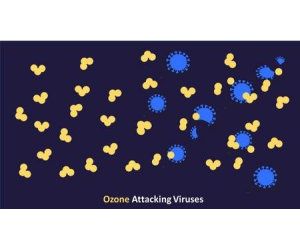
Ozone deactivates viruses!
You need the answers to 2 questions when you use ozone to disinfect your living and working spaces:
Is the ozone concentration high enough to destroy the viruses?
When has ozone dropped low enough for me to go back into the room?
A 2B Technologies Ozone Monitor can answer both questions.
- Based on a sophisticated UV-absorbance technique for measuring ozone
- Measures high concentrations (up to a few hundred parts per million) to answer Question 1 above
- Measures low concentrations (down to a few parts per billion) to answer Question 2
- Superior to electrochemical and HMOS sensors
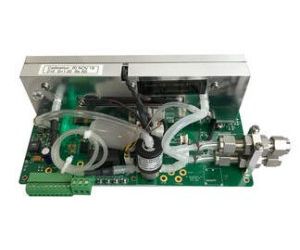
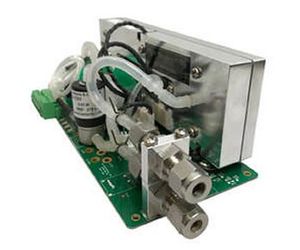
- Bare-bones "ozone monitors on a board"
- Use your system`s pump to bring air into the instrument
- No enclosure, for easy integration into your ozone disinfection system
- Relay for controlling your ozone source
- Model 108-L: Measure from 1 ppb up to 100 ppm (extendable to ~200 ppm upon request)
- Model 108-M: Measure from 20 ppb up to 1000 ppm
- Ensure your room has returned to OSHA limits (2-hour standard of 200 ppb and below)
Model 106-L and Model 106-M Ozone Monitors offer the same range and sensitivity as their Model 108 counterparts.
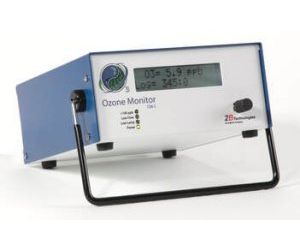
- Self-contained instruments with an enclosure and an internal pump
- Two 2-level relay switches for controlling ozone, sounding an alarm, or controlling other processes based on ozone concentration
- Also available as OEM versions with no case for those who want to include the instrument as part of their ozone disinfection package
Contact us to see how our Ozone Monitors can help to complete your ozone disinfection system!
The Story of Ozone`s Role in Disinfection
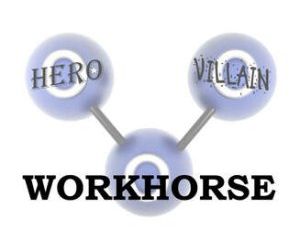
In the atmosphere, ozone plays the villain in the lower atmosphere as a pernicious air pollutant and greenhouse gas, and a hero higher up in the stratosphere where the ozone layer protects us from harmful UV radiation in sunlight. But in the deliberate hands of humankind, ozone plays a third role: versatile workhorse for the purpose of disinfection...
In the atmosphere, ozone plays the villain in the lower atmosphere as a pernicious air pollutant and greenhouse gas, and a hero higher up in the stratosphere where the ozone layer protects us from harmful UV radiation in sunlight. But in the deliberate hands of humankind, ozone plays a third role: versatile workhorse for the purpose of disinfection.
The Right Stuff
Why is ozone (O3) such a good disinfectant? Quite simply, because it has the right stuff. Ozone’s structure makes it a strong oxidizing agent. In the gas phase, it can react with double bonds found in many biological and organic molecules. In water, it is even more reactive and breaks down to form species such as the superoxide ion (O2-), hydroperoxyl radical (HO2) and hydroxyl radical (OH) that attack many biological molecules. These properties combine to make ozone a powerful way to eliminate organic pollutants and biological entities such as bacteria, viruses, fungi, and protozoa. In the case of bacteria, for example, ozone reacts with and breaks the cell wall (lysis), and then can also attack the essential materials within the cell such as proteins and enzymes, killing the organism. Viruses are deactivated through attacks on their surrounding fatty lipid or protein coatings, as well as their interior RNA or DNA components.
A resurgence in the ozone method occurred though, when it was realized that chlorine methods can lead to the production of harmful trihalomethanes in water, and that ozone can eliminate some organic pollutants and protozoa that are immune to chlorine treatment. Techniques are ever evolving and a combination of ozone and chlorine treatment is used in some water treatment facilities. Beyond drinking water treatment, the uses of aqueous ozone in disinfection are numerous and in some cases surprising. Examples include wastewater treatment, swimming pool disinfection, industrial laundry operations, food industry processing, and even clinical medical applications such as surgeries and dental procedures in which dosages of ozone are administered to patients as treatments.
Gaseous Ozone as Disinfectant
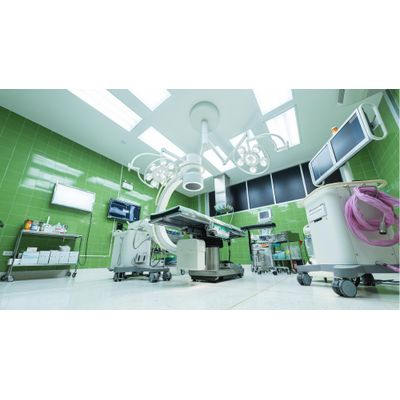
Thus one barrier to ozone’s use in the gas phase is that the concentrations required for disinfection exceed health standards, such as the U.S. workplace 2-hour standard of 200 parts per billion (ppb), and are a human health hazard. “Fumigations” to disinfect must be done with care, in closed and unoccupied areas. In addition, materials such as rubber, synthetics, and paints are susceptible to damage by ozone, and byproducts of reactions with such materials might themselves be a hazard. But the enormous advantages of using ozone in the gas phase include that it is easily generated, reaches every surface in an exposure area, and quickly dissipates after fumigations. Whole rooms and all materials within the rooms (curtains, carpets, bedding, tops and undersides of furniture, corners of rooms, floors, walls, etc.) can be disinfected much more thoroughly than with labor-intensive surface “wipe-downs.” In the hospital setting, operating rooms and other critical care areas can be disinfected, and individual patient rooms can be made safe for the next patient. Any setting with close quarters and rotating occupancy, such as hotel rooms, aircraft, offices, and cruise ships, is the ideal candidate for disinfection of viruses, bacteria, and other health hazards using gaseous ozone. Ozone is itself a powerful deodorant and the disinfection treatment leaves no residual odors, unlike other methods that can have a lingering “chemical smell.”
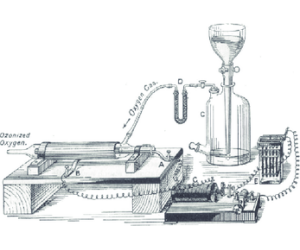
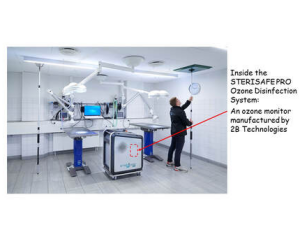
Today, the use of ozone monitors based on the UV-absorbance technique has advanced the precision and reliability of the measurement beyond all previous methods used in ozone disinfection. 2B Technologies has played a part in this advance. Our Model 108 Ozone Monitors are integral to commercial ozone disinfection systems, including those used in medical settings, such as the STERISAFE PRO, and those developed for food safety processing, such as systems made by Purotecs, Inc. The instrument enables precise measurements of ozone across the wide range of ozone concentrations used throughout the disinfection process (20-200 ppm for whole-room exposures, and recovery to safe levels <200 ppb). Thus the 2B Tech Model 108 provides information that is vital to determining whether effective concentrations of ozone are being applied, as well as signaling when concentrations are low enough to safely re-enter a room following a fumigation.
2B Technologies is proud to be on one of the front lines of the virus wars.