


Ever-Power Pte. Ltd.
- Home
- Companies
- Ever-Power Pte. Ltd.
- Applications
- Regenerative Thermal Oxidizer (RTO) for ...
Regenerative Thermal Oxidizer (RTO) for Printing industry-Printing
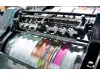
Organized waste gas: Printing oven: During the printing process, the ink needs to be dried in a high-temperature oven. A large amount of VOCs will be released during this process. Laminating machine oven: The adhesives and solvents used in the laminating process will also volatilize at high temperatures to produce waste gas. Unorganized waste gas: Printing workshop: Various operations in the printing workshop, such as ink mixing, cleaning equipment, etc., will produce unorganized waste gas. Ink mixing room: During the ink mixing process, the mixing of ink and solvent will produce a large amount of VOCs.
Most popular related searches
regenerative thermal oxidizer
high temperature oven
dirty solvent
printing system
organic waste
ethyl acetate
thermal oxidizer
thermal oxidation
waste production
mixing system
Exhaust gas characteristics
- Large air volume: The exhaust gas generated during the printing process usually has a large air volume, especially when using large ovens and continuous production lines.
- Low concentration: Although the total amount of exhaust gas is large, the concentration of harmful substances in it is relatively low. This requires special technology and equipment to ensure efficient purification when treating these exhaust gases.
Waste Gas Components
- Ethyl Acetate (EtOAc): Commonly used as a solvent with high volatility.
- n-Propyl Acetate (n-PAc): Another commonly used solvent, often used in inks and coatings.
- Methyl Ethyl Ketone (MEK): Widely used in inks and cleaners, with high volatility and toxicity.
- Isopropyl Alcohol (IPA): A common solvent used for cleaning and diluting inks.
- Ethanol (EtOH): Used in a variety of inks and cleaners, with low toxicity and high volatility.
- Propylene Glycol Methyl Ether Acetate (PMA): Used as a high-performance solvent, commonly found in high-end inks and coatings.
Stay in the loop!
Select your areas of interest to receive industry updates.