


- Home
- Companies
- Efficiency Scientific Instrument Co., ...
- Applications
- The X-Ray Fluorescence Spectrometer ...
The X-Ray Fluorescence Spectrometer EDX8800M Max Is Used For The Rapid And Accurate Quantification Of Gypsum Components - Metal
Gypsum, a monoclinic mineral mainly composed of calcium sulfate hydrate, comes in white, gray, red and brown. It is classified into raw gypsum (dihydrate), anhydrite, and hemihydrate gypsum. Raw gypsum has a density of 2.3-2.7 g/cm³, Mohs hardness ~2, and is soft, highly absorbent, and colorless-transparent in crystal form, losing water upon heating.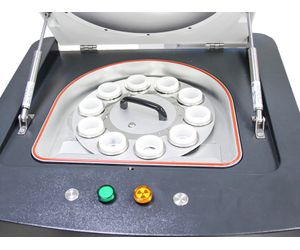
Formed via dissolution-precipitation or evaporation-precipitation processes, gypsum is widely distributed globally. In China, it is abundantly deposited in regions like Gansu and Inner Mongolia. Its primary applications lie in the construction sector, where it is used to produce gypsum boards for partitioning and ceiling systems, as wall repair materials, and fire-insulation agents. It also serves in sculpture and ceramic mold making. In the chemical industry, gypsum acts as a feedstock for sulfuric acid production, while in agriculture, it regulates soil pH and improves structure to benefit crop growth.
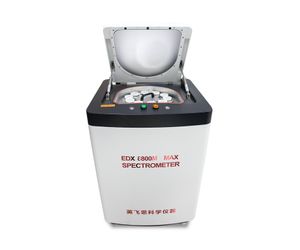
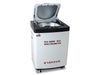
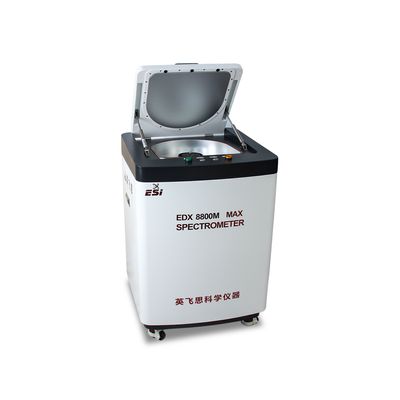
The EDX8800M MAX, a vertical high-performance X-ray fluorescence (EDXRF) material analyzer, is equipped with a high-power X-ray excitation system and a high-count-rate, high-resolution FSDD detector. It features an excellent linear dynamic range, enabling more precise process and quality control across metals, cement, minerals, mining, glass, and ceramics.
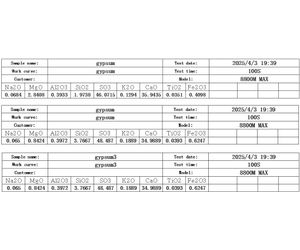
Below is the test report on the rapid and accurate quantification of gypsum components using the EDX8800M MAX X-ray Fluorescence Spectrometer.