


Efficiency Scientific Instrument Co., Ltd (ESI)
28 Applications found
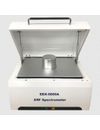



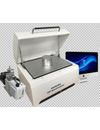
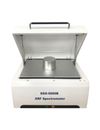
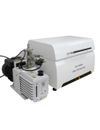
Efficiency Scientific Instrument Co., Ltd (ESI) applications
The catalyst alloy powder is mainly produced by high-temperature melting of iron-based materials, high-pressure water atomization and crushing, and vacuum drying.
Our company used a series of catalyst alloy sheet standards with known contents of Ni, Mn, and Co to directly measure the intensities of the characteristic X-rays of Ni-Mn-Co on the energy dispersive X-ray fluorescence spectrometer EDX9000A alloy analyzer. The contents of Ni, Mn, and Co were fitted with the intensities of their characteristic X-rays to establish a working curve. When measuring unknown samples, the contents of Ni, Mn, and Co were obtained through the working curve based on the intensities of the characteristic X-rays of Ni, Mn, and Co measured. The content ranges of Ni, Mn, and Co in the Ni-Mn-Co catalyst alloy measured by the EDXRF method were 65% - 88%, 10% - 35%, and 1% - 10% respectively. The determination precisions (n = 6) of Ni, Mn, and Co were 0.3%, 1%, and 4% respectively.
We use the platinum and palladium standard samples provided by the National Standard Materials Committee to calibrate the EDX6000 gold detector according to the basic principles of X-ray fluorescence spectrometry analysis method, then test the samples and
The Compass200 portable X-ray fluorescence spectrometer soil analyzer was used to test the main heavy metal pollutants Cu, Zn, Pb, Cr and As in the soil. The results showed that the lowest detection limits of Cu, Zn, Pb, Cr and As elements were respective
Before measuring the content of platinum, palladium, and rhodium in waste automobile exhaust catalysts, it is necessary to separate platinum, palladium, and rhodium from the catalyst and then measure them. The methods for separating and enriching precious
The EDX9000A alloy analyzer with EDXRF fluorescence spectrum enables users to analyze more than 23 elements such as nickel, cobalt, copper, tin and lead in iron, steel and alloys without damage, quickly, directly and conveniently. After matrix correction using unique fundamental parameters and empirical coefficients, this universal calibration curve can analyze any metal sample with unknown composition and obtain fast results.
The EDX9000A alloy analyzer with EDXRF fluorescence spectrum is the ideal solution for users in the following areas:
1.Ferrous metal production (iron and steel);
2.Non-ferrous metal production (nickel, cobalt, copper, tin, lead);
3.The foundry;
4.Laboratories or scientific institutions and third-party testing platforms;
5.EDX9000A alloy spectrum analyzer is easy to operate and has good analytical performance.
The ESI EDX9000B spectrometer is mainly used for elemental composition analysis throughout the mining process—from exploration to mineral concentrates—showing excellent flexibility and stability in harsh environments. Measurement conditions were established for these elements, including corrections for matrix effects and spectral line overlaps. Calibration curves were created using over 60 standard samples of soil and sediments. The empirical coefficient method and Compton internal standard method corrected matrix effects, while multiple regression effectively eliminated spectral line overlap interferences. Precision analysis of soil standards revealed relative standard deviations (RSDs) from 0.74% to 17%. Analyses of soil and rock samples yielded results consistent with certified values.
The Bayan Obo Mine plays a vital role in the growth of China's rare earth industry. Therefore, it is essential to perform a swift and precise analysis without altering the mine's structure. X-ray fluorescence spectrometry stands out for its ability to directly analyze both bulk and powdered samples. Additionally, it offers high accuracy, a broad range of analyzable elements (from Na to U), rapid analysis speed, and ease of use—perfectly aligning with the needs for quick and accurate qualitative and quantitative assessments of the Bayan Obo Mine. Furthermore, the X-ray fluorescence spectrometer serves as an important tool for modern mineral composition analysis.
Kyanite is a highly distinctive mineral. Its chemical composition is aluminum silicate (Al₂[SiO₄]O), and its crystals often take the form of flat columns. It boasts a wide range of colors, with blue being the most prevalent, and it can also be white, gray, or even have a slightly greenish hue.
The EDX8800H Max possesses the following features:
American AmpTek - FSDD detector, featuring high resolution and a high count rate.
The vacuum testing environment offers the best detection effect for light elements.
Non-destructive element analysis covering from 11Na to 92U.
Suitable for testing various complex mineral samples, including solids, liquids, alloys, powders, and slurries.
Multi-combination filter system, effectively enhancing the detection limit of trace elements.
Robust design suitable for various complex and harsh field work environments.
Coating analysis can offer extensive information about materials, items, and so on. The most straightforward example is that it can measure the content of details made of a specific alloy without causing any damage to them. Another application of the analysis is to identify harmful or excessive impurities and gold plating by assessing jewelry. Coating thickness analysis can be utilized in nearly every domain of heavy and light industries, construction, public utilities, and the like.
The EDX9000Bplus energy dispersive X-ray fluorescence spectrometric ore analyzer offers rapid determination and precise results. Once an optimal detection calibration curve is established, it exhibits several outstanding features: Direct determination of iron ore samples is possible, enabling the simultaneous quantification of multiple elements with relatively minor errors. No additional chemical reagents are needed apart from iron ore standard samples, eliminating the generation of wastewater and waste gas, thus posing no environmental or operator hazards. It provides a swift determination speed and high detection efficiency, significantly reducing the detection cycle and is particularly well-suited for the rapid analysis of iron ore samples.