

- Home
- Companies
- Artas Group
- Applications
- Waste Water Treatment Plants for Water ...
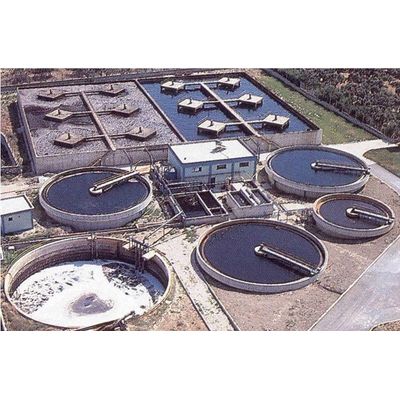
Waste Water Treatment Plants for Water - Water and Wastewater - Water Treatment
Each production process in industries requires different water quality. The treatment method is determined according to the raw water source and usage purpose with Artas expertise.
- Pre-Treatment Iron and Manganese Removal Coagulation and Flocculation Filtration Classical Filtration Membrane Filtration
- Softening Lime-Soda Ash Process Ion Exchanger Nanofiltration (NF) Demineralisation Ion Exchanger Reverse Osmosis (RO) Ultra Pure Water Mixed-Bed Electrodialysis (EDI)
Pre-Treatment Iron and Manganese Removal
The iron and manganese may be removed from water by various means. The most popular approach involves oxidation -introducing molecular oxygen via aeration and usage of other oxidizing chemicals- and subsequent removal of precipitates. For aeration, cascade aerators or closed system methods are used.
Coagulation and Flocculation
This method is widely used for the removal of turbidity and high suspended solids found particularly in surface waters. Coagulants are introduced into the water in rapid mixing tanks at suitable pH value. Thus, formed colloids are transformed to settable flocks by addition of polymers in the slow mixing tank. This unit is followed by a settling tank, where these flocks are settled and removed. Suitable additives and dosing rates are determined by Jar Tests that carried out by our design engineers.
The pre-treatment methods are followed by filtration.
Filtration
Two filtration methods are used.
Classical Filtration
Sand or multimedia filters are used primarily to remove suspended particulate material from water. These filters also remove iron and manganese precipitates via using special filtration media. Granular activated carbon filters are used for adsorption of organic compounds, taste and odour reduction in granular beds, besides filtration. Pressurized steel or FRP vessels contain quartzite silica sand, anthracite, green sand or granular activated carbon as filling material. PP mushroom type nozzles are installed in the vessel for homogenous distribution of back wash water and air in the vessel. Automatic backwashing of filter columns are controlled by differential pressure between inlet and outlet lines of filter. In addition to this type of filters, ceramic cartridge filters having a pore size down to 0.2 microns contain silver ions and provide bacteria filtration.
Membrane Filtration
Microfiltration (MF) provides filtration of bacteria and colloidal materials. Ultrafiltration (UF) filters bacteria, viruses, high molecular size proteins and organic matters. Ultrafiltration provides disinfection beyond particle removal. Both at microfiltration and ultrafiltration, low-pressure membranes are used.
Softening
Lime-Soda Ash Process
This method is commonly used by municipalities that consume high volumes of water for the treatment of very hard or alkali waters and highly turbid waters. In this method, primarily lime is dosed to form settable compounds from temporary hardness ions and subsequently by soda dosage permanent hardness ions precipitates. These compounds are settled in a settling tank. By using lime-soda method, 8-10 °F alkalinity and hardness is achieved. This method is primarily used as a pre-treatment or potable water treatment.
Ion Exchanger
In the water softening columns, calcium and magnesium ions are exchanged with sodium ions of the resins, and thus softened. Softening units are designed according to Fluidized-Bed technology under Bayer license since 1987. Fluidized-Bed technology saves from operational costs, by consuming less water and less brine (90 g NaCl / l) while compared with conventional softeners. Pressurized steel vessels have a media of mono disperse resins, food-grade or industrial type, high ion exchange capacity softening and inert resins. High efficiency of regeneration is secured by distribution of water and regenerant in the column homogenously via nozzle plates of Artas design. Softening column’s regeneration periods are controlled automatically by volumetric, timer or hardness analyser. As an alternative to ion exchange softening, nanofiltration can also be used.
Nanofiltration is also called as low pressure reverse osmosis (RO) or membrane softening. Membrane porosity of NF is between RO and UF. Nanofiltration membranes exhibit high rejection of divalent ions such as calcium and magnesium, larger monovalent ions, colour and odour.
Demineralisation
High quality demineralised water that is crucial for steam turbines, boilers and process water is produced by two methods.
Ion Exchanger
Cation and anion exchange resins are used for exchanging cations and anions with H and OH ions bounded to resins, thus producing demineralised water. Under Bayer licence, Artas designs fluidized-bed systems producing high quality of demineralised water at minimum operation costs by consuming much less chemicals and water during regeneration while compared with conventional ion exchange systems. At degasifier, installed in between cation and anion exchanger columns, unstable carbonic acid is decomposed to water and carbondioxide and carbondioxide is striped. In this method, steel columns coated with acid and alkali resistant material are used. Artas patented special nozzle distribution plate provides homogenous distribution of water and regenerant into ion exchange resins. The ion exchange capacity of resins is used at maximum and minimum regenerant is consumed. Acid and caustic are used for regeneration.
Regeneration period is initiated automatically via conductivity instrument installed at the down stream of the demineralization system. Multistep columns that contain both cation and anion exchange resins can be installed where low space occupation requested.
Reverse Osmosis (RO)
In reverse osmosis, water is transported from a solution having a high salt concentration to one having a low salt concentration through a semipermeable membrane by applying pressure exceeding osmotic pressure of the salt solution. Two streams produced are concentrate, disposed water, and permeate, produced pure water. RO removes ionized salts, colloids, and organics down to 150 molecular weight. RO membranes are protected against scaling, free chlorine, and organic fouling via chemical dosing such as; antiscalant, sodium metabisulfide, biocide.
Ultra Pure Water
Ultra pure water is mainly used for high pressure steam turbines and micro electronics industry.
The demineralised water passes through mixed-bed ion exchange columns in order to capture the ion leakage from the distillation/ demineralization unit and to provide high quality water. In these columns, anionic and cationic resins are mixed during operation. In single column, high quality demineralised water production is achieved via this infinite anion and cation chain.
Electrodialysis (EDI)
Electrodialysis is an advanced water treatment process in which ions are transferred through ive anion and cation membranes from a less concentrated to a more concentrated solution as a result of the passage of direct electric current. Negative ions pass through an anion membrane while positive ions are rejected. Conversely, positive ions pass through a cation membrane while negative ions are rejected. ED process requires periodic cleaning.